Google Challenges Nvidia with Ambitious AI Chip Strategy
In a calculated gambit, Google has set its sights on Nvidia's stronghold in the AI chip market. Drawing from Nvidia’s own playbook, Google is expanding its AI chip capabilities with a focus on its Tensor Processing Units (TPUs). This move is part of a broader strategy to diversify its offerings and compete in a market largely dominated by Nvidia.
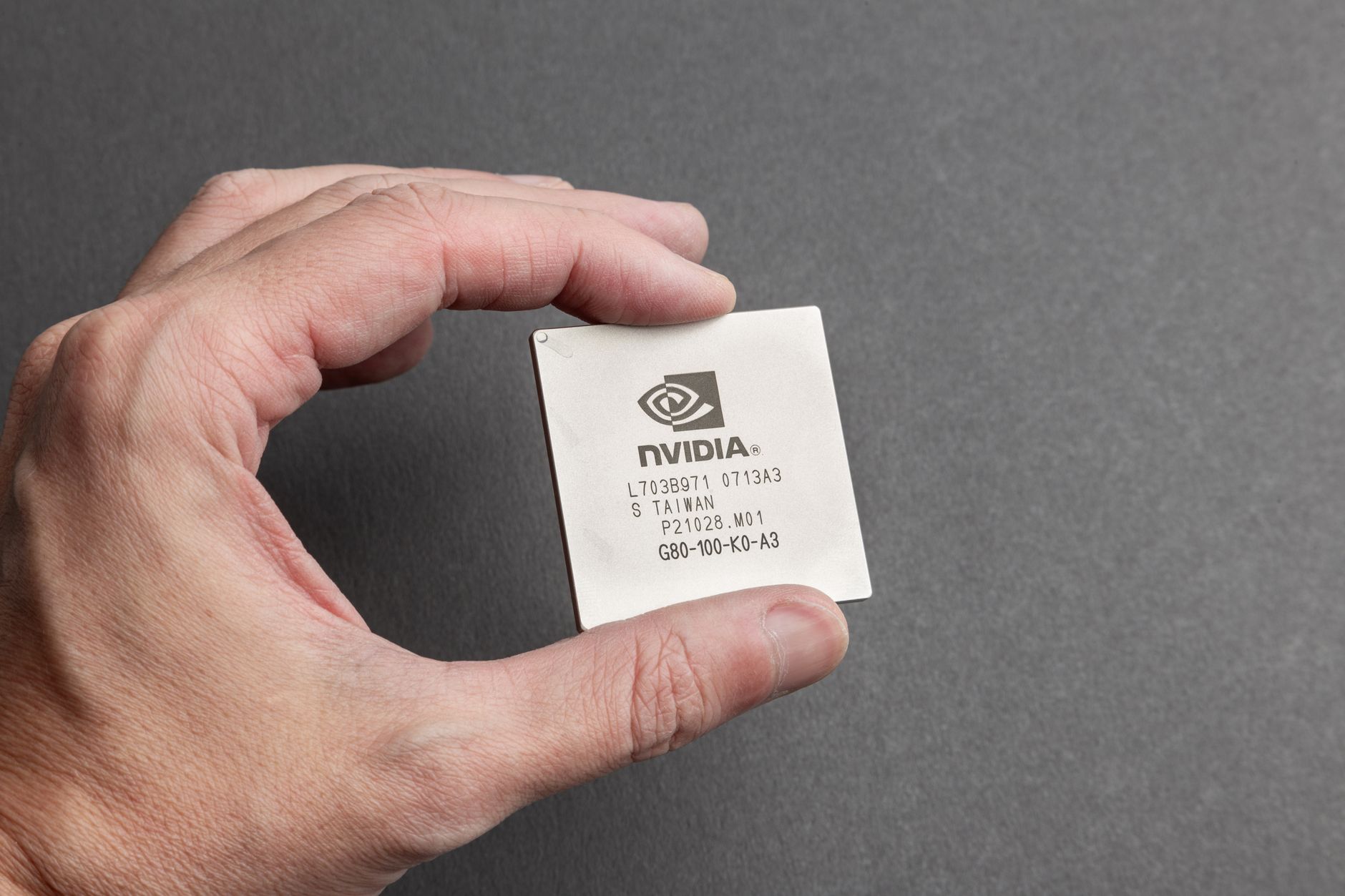
Nvidia, renowned for its graphics processing units (GPUs), holds a commanding share of the AI chip market, with estimates suggesting it controls over 90%. Google's foray into this territory reflects a growing ambition to carve out a significant slice of this lucrative sector.
One of Google's key strategies involves leveraging its cloud platform to offer TPUs to other companies, a tactic reminiscent of Nvidia's approach. By making these chips available to external firms, Google not only boosts its revenue but also fosters an ecosystem where its technology becomes indispensable.
Strategic Partnerships and Investments
To bolster its position, Google has teamed up with Marvell Technology. This partnership is expected to enhance the efficiency and capabilities of its TPUs. Moreover, Google has made substantial investments in its TPU strategy, signalling its commitment to becoming a formidable player in the AI chip arena.
While Nvidia's CEO Jensen Huang has publicly downplayed the threat posed by Google's efforts, the competitive dynamics of the chip market suggest a potentially significant shift. Google's entry, backed by substantial resources and strategic acumen, could lead to increased competition and innovation.
Implications for the AI Industry
This development is not merely a corporate rivalry; it has broader implications for the AI industry. As companies like Google and Nvidia continue to enhance their chip technologies, the capabilities of AI models are likely to expand. This could accelerate advancements across various sectors, from healthcare to autonomous vehicles, where AI applications are becoming increasingly vital.
In conclusion, while Google has a challenging path ahead to unseat Nvidia's dominance, its strategic moves and investments suggest it is ready for a long-term contest. The coming years may witness a fascinating battle of giants in the AI chip market, with potential benefits for the broader tech industry.