Hubble's Latest Spectacle: A Starry Nursery in Full Bloom
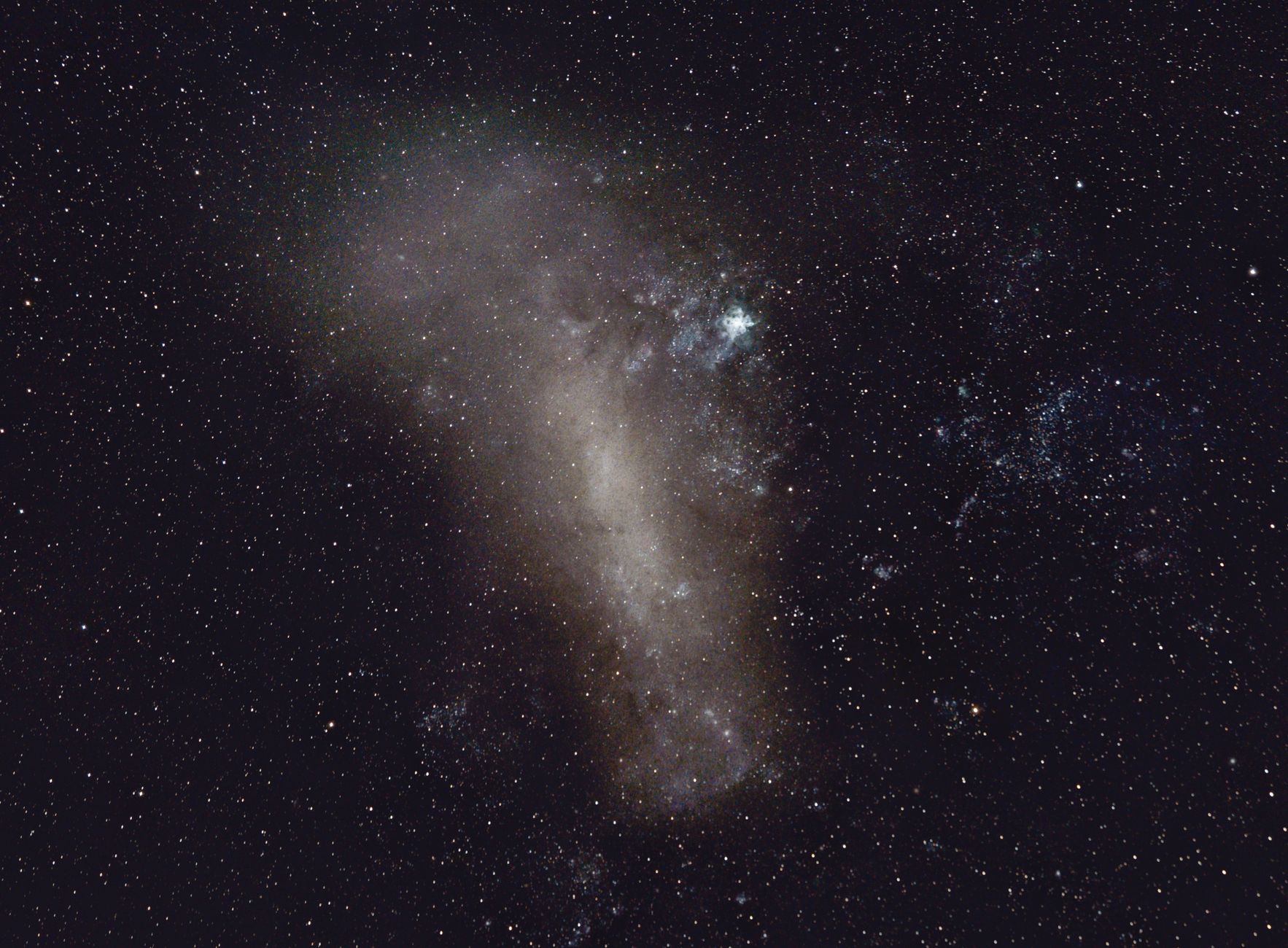
Floating some 160,000 light-years away in the southern celestial hemisphere, the Large Magellanic Cloud is home to a bustling nursery named LH 95. This cosmic enclave, recently immortalised by NASA's Hubble Space Telescope, is a scene of stellar splendour, where new stars are born amidst a kaleidoscope of cosmic hues.
The image, a symphony of brilliant blues and radiant whites, captures the raw beauty of star formation. At its heart, massive blue giants preside over a younger generation of pre-main-sequence stars, still gathering material from their surroundings. It's a snapshot of creation, frozen in time, and it offers a rare window into the chaotic yet harmonious process of stellar birth.
The Science Behind the Spectacle
LH 95 is located in the Tarantula Nebula, one of the most prolific star-forming regions in our galactic neighbourhood. Here, gravity and gas play a delicate dance, coaxing clouds of hydrogen into dense knots that ignite nuclear fusion. This is where stars first flicker into existence, beginning their journey through the cosmos.
The data gleaned from such Hubble images are invaluable to astronomers. They provide crucial insights into the lifecycle of stars, illustrating the transition from dense gas clumps to luminous celestial bodies. Observations like these help scientists understand the dynamics of star clusters and the factors influencing star formation rates.
Cosmic Insights and Future Prospects
Understanding the intricacies of star formation isn't just an academic exercise. It has profound implications for our comprehension of the universe. Stars are the factories of the elements, forging the building blocks of planets and life itself. By studying these stellar nurseries, researchers can piece together the history of our own solar system and others scattered across the universe.
As technology advances, telescopes like Hubble continue to push the boundaries of our knowledge. Each new image is a reminder of the vastness and complexity of the cosmos, urging us to explore further, question more deeply, and marvel at the universe's infinite wonders.