IBM's Revolutionary Chip: A New Era for Moore's Law
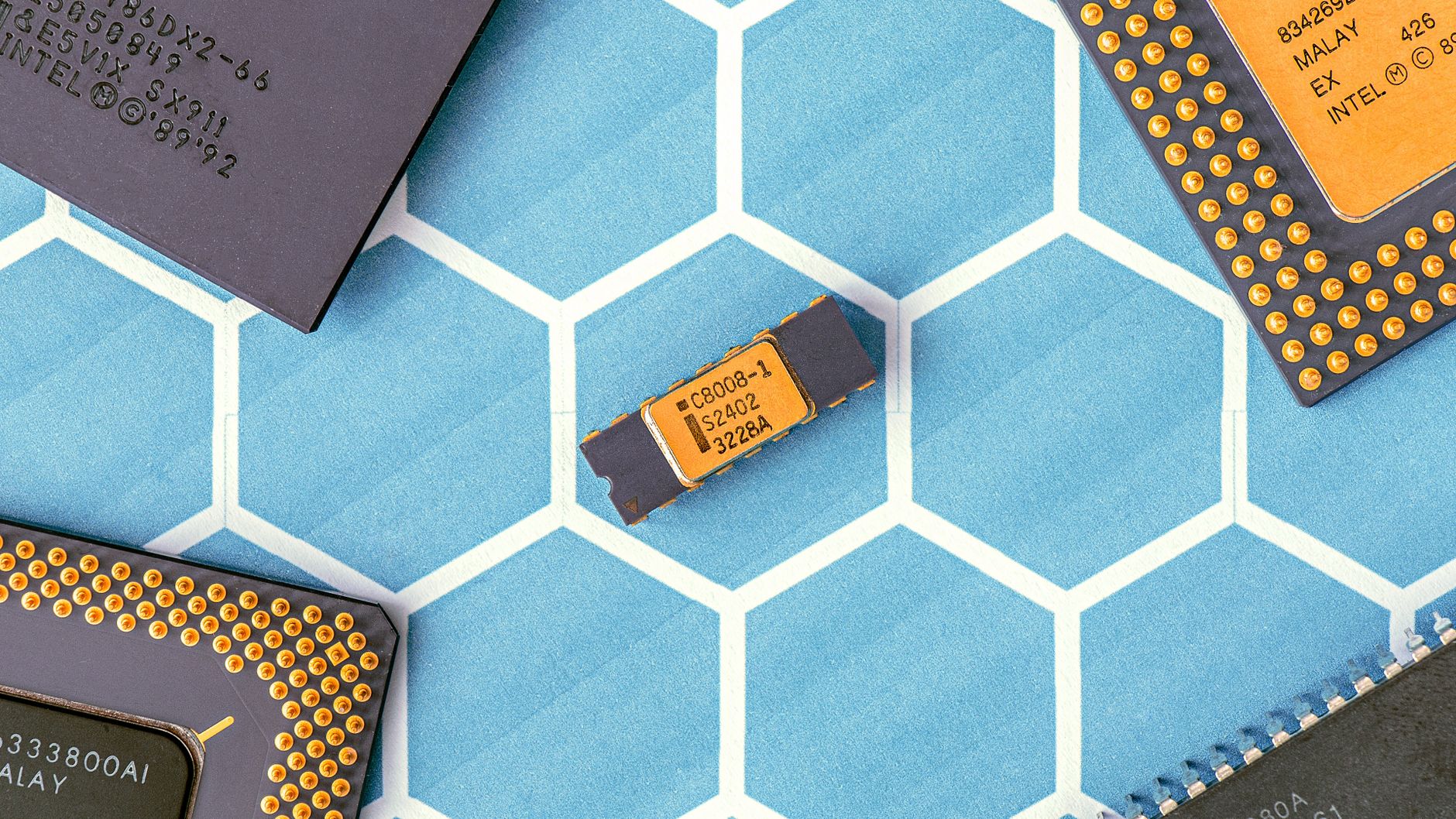
In the relentless pursuit of technological advancement, IBM has unveiled a chip technology poised to extend Moore's Law for another decade. The revelation comes in the form of a prototype chip, boasting an astonishing 100 billion transistors packed onto an area no larger than a human fingernail. This feat, twice the density of IBM's 2021 offering, signals a new frontier in semiconductor design.
Moore's Law, the principle stating that the number of transistors on a microchip doubles approximately every two years, has been a guiding tenet for the electronics industry since 1965. However, as components shrink to near-atomic scales, many have predicted the law's impending demise. IBM's latest innovation could, however, stave off this fate.
A Revolutionary Design
The new chip employs a sub-1 nanometre (nm) technology, marking the world's first such achievement. This involves a 0.7 nm transistor architecture, or a 7 angstrom node, which represents a significant leap in miniaturisation. Such a breakthrough not only promises faster and more energy-efficient computers but also revitalises the possibilities within artificial intelligence and quantum computing.
IBM's achievement is not just a testament to human ingenuity but also a strategic move in the competitive semiconductor industry. With tech giants racing to develop smaller, more powerful chips, IBM's announcement could reshape the market dynamics.
Implications for the Future
The potential applications of this technology are vast. Smaller, more efficient chips could lead to advancements in everything from consumer electronics to complex scientific computations. Moreover, as environmental concerns grow, the energy efficiency of these chips offers a promising solution to reducing the carbon footprint of technology.
Despite the intense competition, IBM's leadership in this domain underscores its commitment to innovation. As industries increasingly rely on computing power, the ability to keep pace with Moore's Law will be crucial. IBM's breakthrough provides a new lease of life for this enduring principle, ensuring that technology continues to evolve at a breathtaking pace.