Milky Way's Coldest 'Stars': Alien Megastructures?
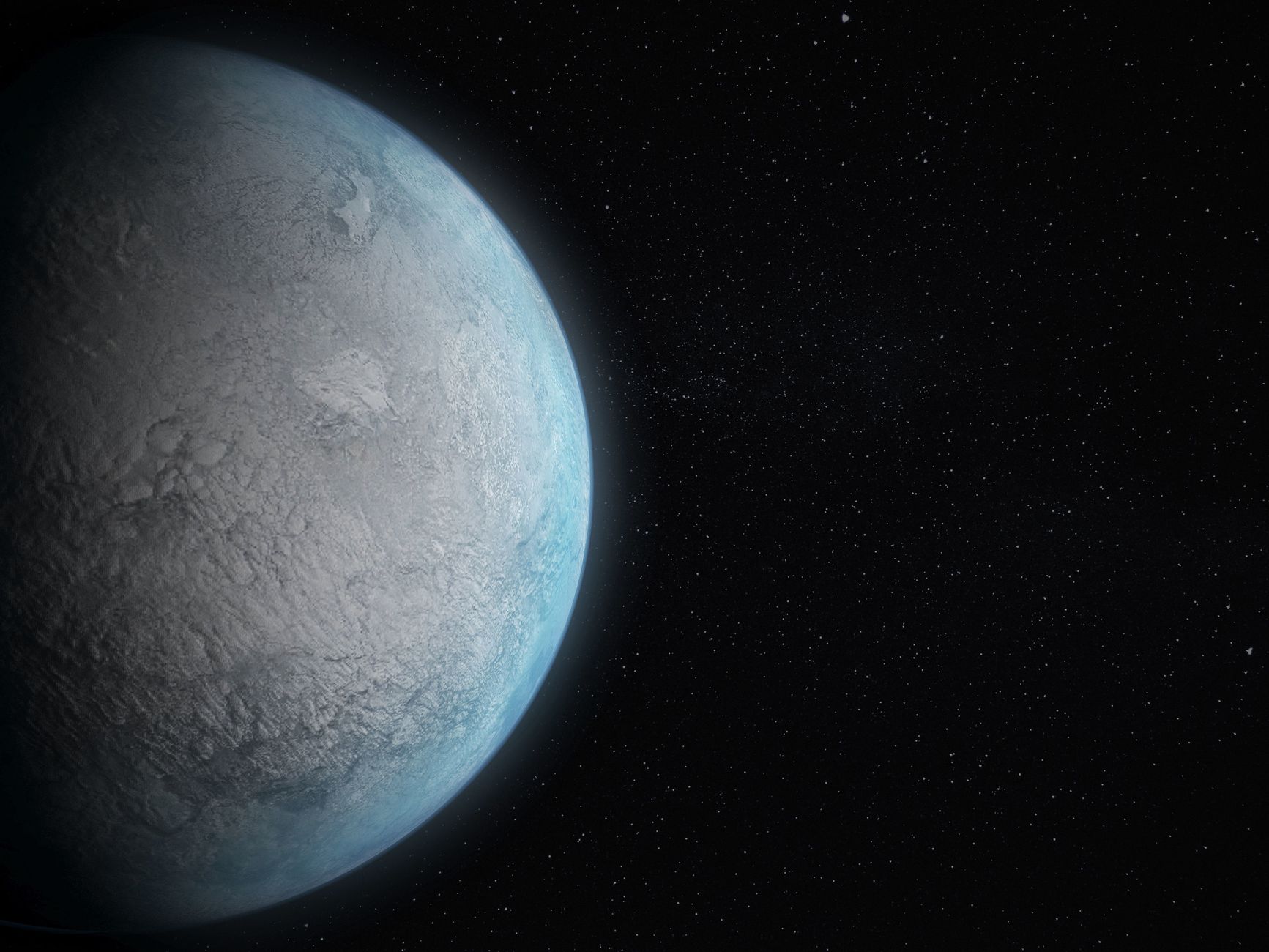
In a theory that reads more like science fiction than current scientific discourse, researchers have posited that some of the Milky Way's coldest celestial bodies may not be stars at all, but rather colossal alien megastructures. This extraordinary proposition, currently the subject of intense scrutiny, suggests that advanced civilisations could be employing these structures to harness stellar energy.
The concept isn't entirely new. The idea of a 'Dyson sphere', a hypothetical construct designed to envelop a star and capture its power output, has been around for decades. Yet, recent observations have prompted scientists to revisit this idea with fresh eyes. These 'cold stars', as identified in parts of the Hertzsprung-Russell diagram where conventional stars do not naturally occur, could indicate the presence of such advanced technologies.
Revisiting the Dyson Sphere
Traditionally, a Dyson sphere was imagined as a solid shell around a star. However, contemporary thought leans towards a 'Dyson swarm'—a myriad of energy-collecting satellites orbiting the star. This would allow for the capture of much of the star's energy output while remaining practically invisible to us.
What makes these cold stars particularly intriguing is their unexpected placement on the Hertzsprung-Russell diagram, a vital tool for astronomers. The diagram maps stars according to their luminosity and temperature, and these bodies appear in a quadrant typically devoid of natural stars. Could this be the signature of an advanced alien civilisation?
Why It Matters
The implications of such a discovery are vast. If these structures are indeed real, they would signal the presence of intelligent life capable of constructing and maintaining such colossal engineering feats. This would not only revolutionise our understanding of the cosmos but also of ourselves as a species.
Despite the excitement, scepticism remains. Critics argue that more mundane explanations, such as unknown stellar phenomena, could account for these observations. Nonetheless, the prospect of discovering extraterrestrial intelligence has reignited a sense of wonder in the scientific community.
As research continues, the world watches with bated breath. Whether these cold stars are signs of alien life or not, they remind us of the vast mysteries the universe still holds.