Physicist Creates 'Mini-Universe' to Test the Mysteries of Time
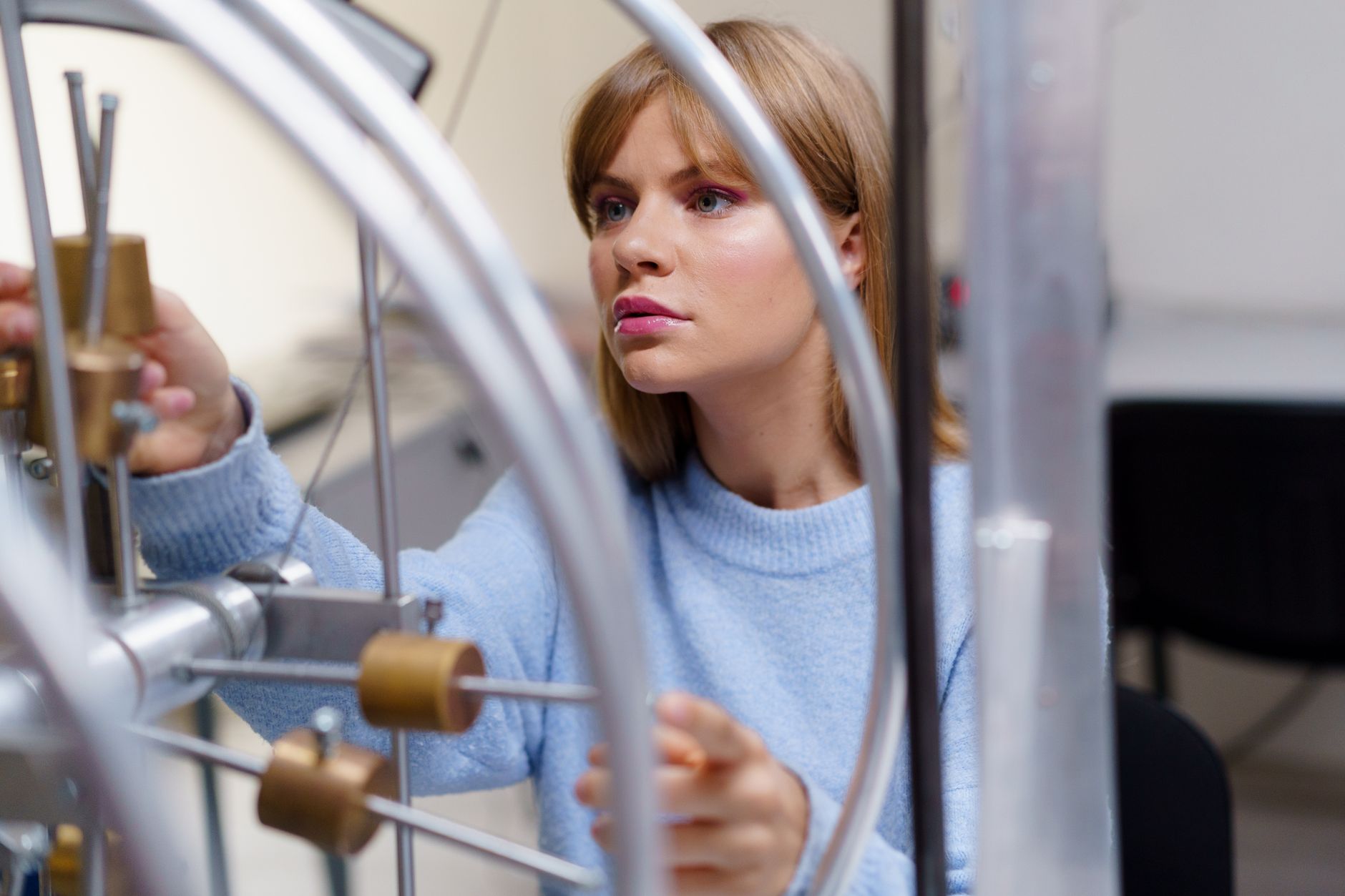
In the quiet confines of a laboratory, a physicist is playing god — or at least a demiurge of sorts — by crafting a 'mini-universe'. This ambitious experiment aims to tackle one of the most perplexing questions in science: the nature of time itself. Is time a constant, marching inexorably forward, or is it a more malleable construct that can be bent, slowed, or even stopped?
The physicist, whose identity is guarded as carefully as the secrets of the universe he is probing, has meticulously recreated conditions that allow for the manipulation of time. By controlling environmental factors such as temperature and pressure, the boundaries of time as we perceive it are being stretched and scrutinised.
It sounds like the stuff of science fiction, yet it's a reality in this lab where time appears to behave unpredictably. 'Time was speeding up, slowing down, or even stopping,' the physicist noted, a description that tantalises the imagination and challenges our fundamental understanding of the universe.
Why Time Matters
The implications of these findings could be profound. Time is a cornerstone of physics, underpinning our understanding of everything from the decay of particles to the expansion of the universe. If time is not as rigid as once thought, the consequences could ripple through the fields of quantum mechanics and cosmology.
Moreover, this research might offer insights into the ever-elusive concept of time travel, a notion that has captivated human curiosity for centuries. While practical applications may still be a distant dream, the theoretical groundwork being laid could one day bridge the gap between fantasy and reality.
The Wider Universe
Beyond the potential for scientific breakthroughs, this experiment invites us to reconsider our philosophical perspectives on time. If time can be altered in a lab, what does that mean for the human experience, which is so intricately tied to the passage of time? Might this research eventually lead to technologies that could extend life or preserve moments indefinitely?
For now, the physicist's 'mini-universe' is a microcosm of possibilities, a testament to human ingenuity and the relentless pursuit of knowledge. As we peer into this constructed cosmos, we are reminded of how little we truly know about the universe and our place within it.