Physicists Forge Time in a Miniature Universe Without Clocks
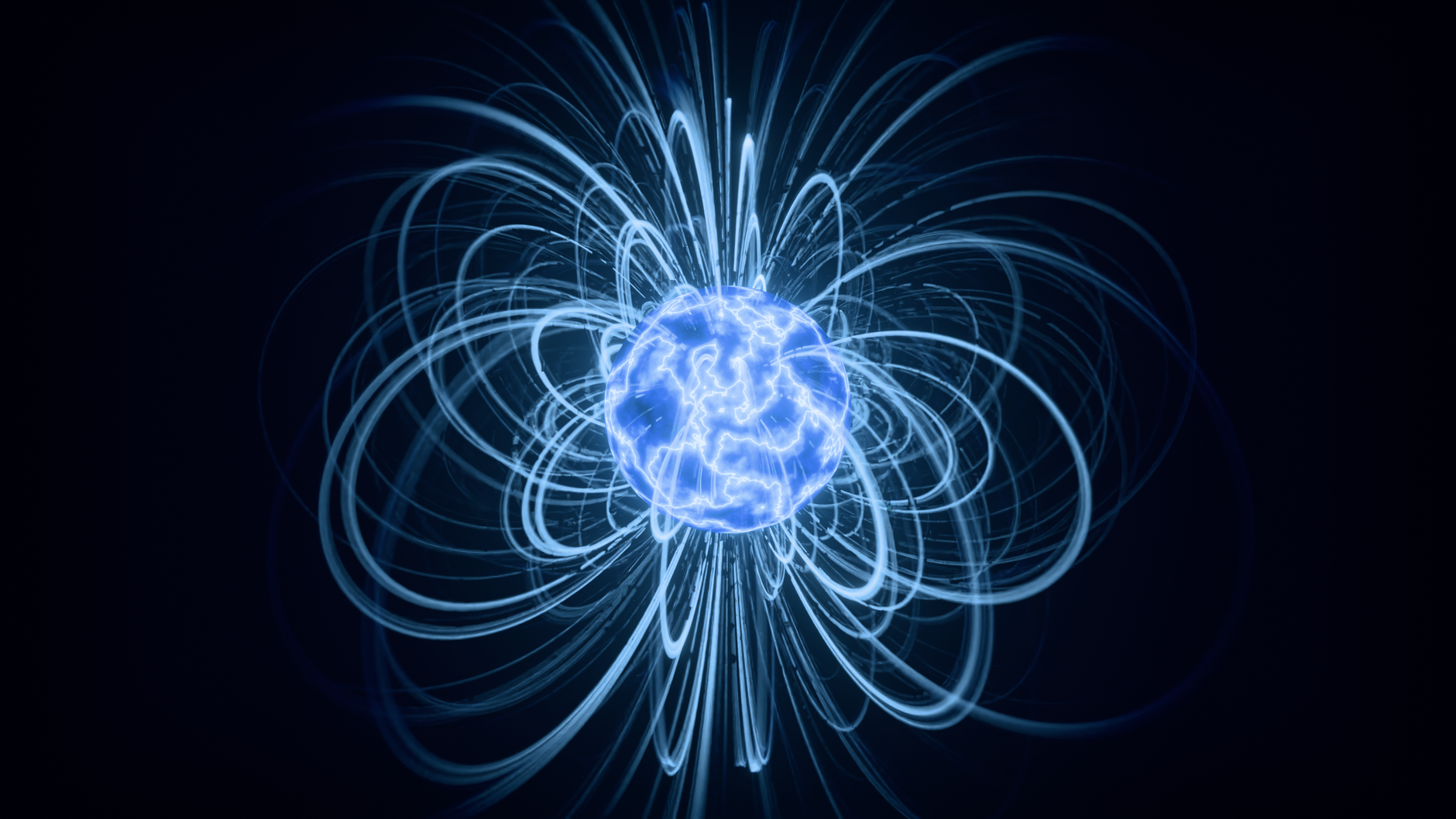
In a laboratory at the University of Birmingham, physicists have embarked on an audacious journey to redefine our understanding of time. By creating a miniature universe using 24,000 ultra-cold atoms, they have set the stage for a profound experiment that could shift the very foundations of physics.
Traditionally, time has been perceived as an immutable backdrop against which the universe unfolds. However, this experiment challenges that notion, suggesting time could be an emergent phenomenon, arising from the internal dynamics of a system rather than being an external constant.
The Experiment
The physicists employed a Bose-Einstein condensate, a state of matter formed at temperatures near absolute zero, to construct their tiny universe. In this chillingly cold environment, atoms behave in unison, providing a pristine platform to test theoretical propositions about time.
Without an external clock, the experiment relies on the relationships between these atoms to create a sense of time. As interactions among the particles occur, a semblance of temporal flow emerges, challenging the long-held belief that time must be externally regulated.
Implications and Insights
This breakthrough carries significant philosophical and scientific implications. If time can indeed emerge internally, it could revolutionise our understanding of the universe, potentially impacting how we perceive causality and the laws governing nature.
Furthermore, such findings may offer new insights into quantum gravity, a field striving to reconcile quantum mechanics with general relativity. The experiment opens up new possibilities in the quest for a unified theory, as it hints at a universe where time is not a fixed dimension but a flexible construct shaped by its constituents.
As the results of this experiment permeate through the scientific community, they invite us to reconsider the very fabric of reality. The notion that time might not be an inherent feature but a dynamic outcome of complex interactions is a tantalising prospect, one that could reshape our comprehension of existence itself.