Quantum Leap: Long-Theorised Entanglement Now a Reality
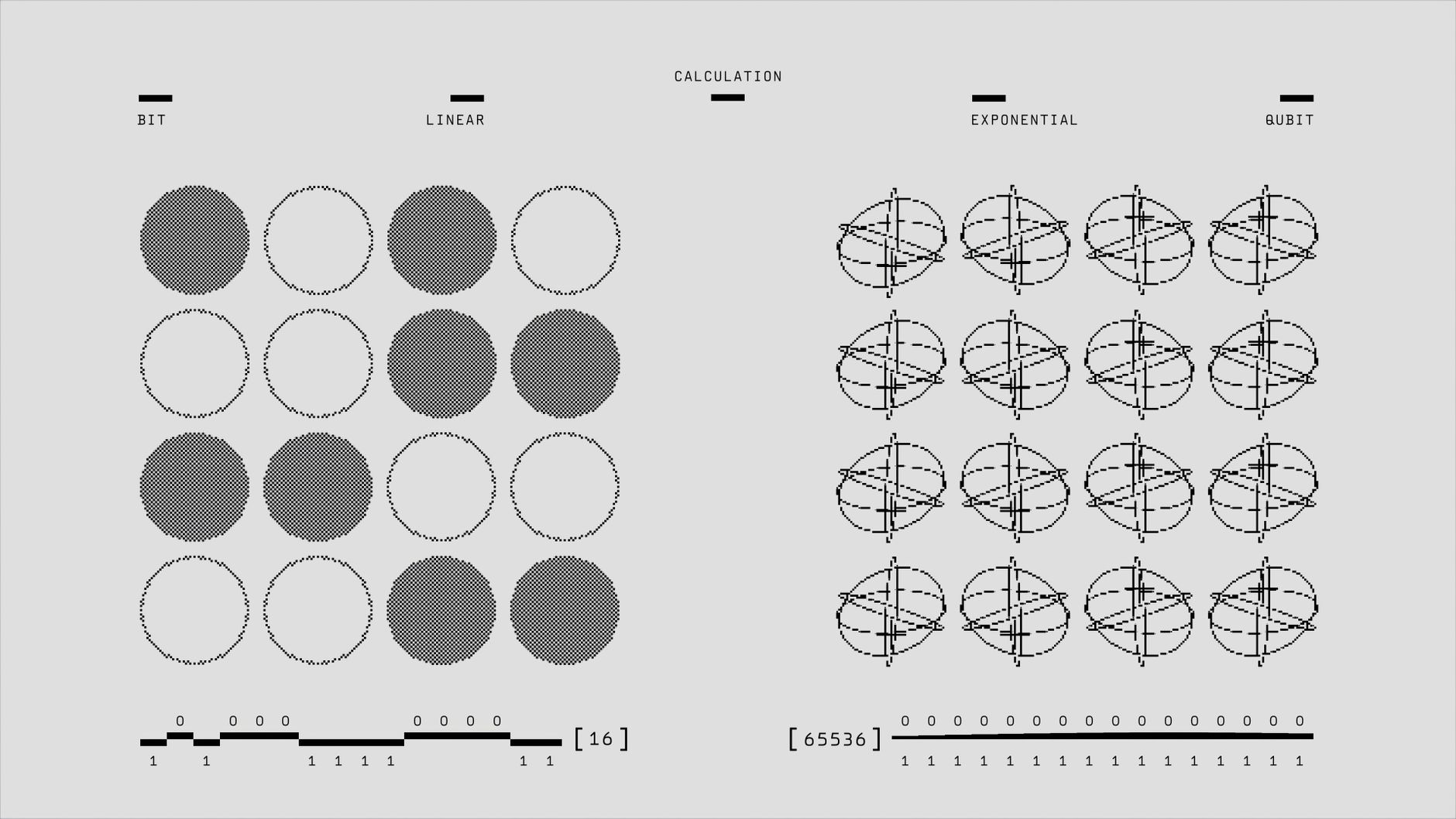
In the labyrinthine world of quantum physics, where particles dance to the tune of probabilities rather than certainties, a 20-year-old theory has finally found its stage. Physicists have confirmed the possibility of achieving quantum entanglement between isolated qubits, a feat that could propel the nascent field of quantum computing into a new era.
The breakthrough, achieved by researchers at the Institute of Science and Technology Austria (ISTA), centres on a concept known as distributed entanglement. Traditional methods required intricate active controls and repeated measurements, but the ISTA team has demonstrated a more elegant approach. By employing a quantum bath, they synchronised two isolated qubits, effectively proving a concept that had lingered in theoretical limbo for two decades.
Dr. Michael Walther, a leading physicist on the project, remarked, "We present a relatively simple method that could be scaled up to synchronise multiple qubits. This is a significant step towards more practical and scalable quantum technologies." The prototype, though still in its infancy, marks a promising beginning for distributed quantum computing.
From Theory to Practice
The significance of this development cannot be overstated. Quantum computers, which promise to solve complex problems beyond the reach of classical machines, rely heavily on entanglement. This peculiar phenomenon, where particles become interconnected in such a way that the state of one instantly influences the state of another, even across great distances, is crucial for the operation of quantum networks.
Historically, achieving and maintaining entanglement has been a technical challenge, often requiring elaborate systems that are neither practical nor scalable. The ISTA team's method, which utilises the natural environment of a quantum bath, offers a streamlined alternative that could pave the way for the commercial viability of quantum computing.
A New Chapter in Quantum Technology
While the full implementation of this technique remains on the horizon, the implications are profound. Quantum computing is expected to revolutionise fields from cryptography to drug discovery, offering computational power that dwarfs today's supercomputers.
This confirmation of a long-theorised method for achieving entanglement not only bolsters the foundations of quantum theory but also ignites a renewed sense of excitement and possibility within the scientific community. As researchers continue to refine and expand upon these findings, the quantum future that once seemed distant now appears tantalisingly within reach.