Scientists Uncover Light's Slowdown Secret in the Nanoworld
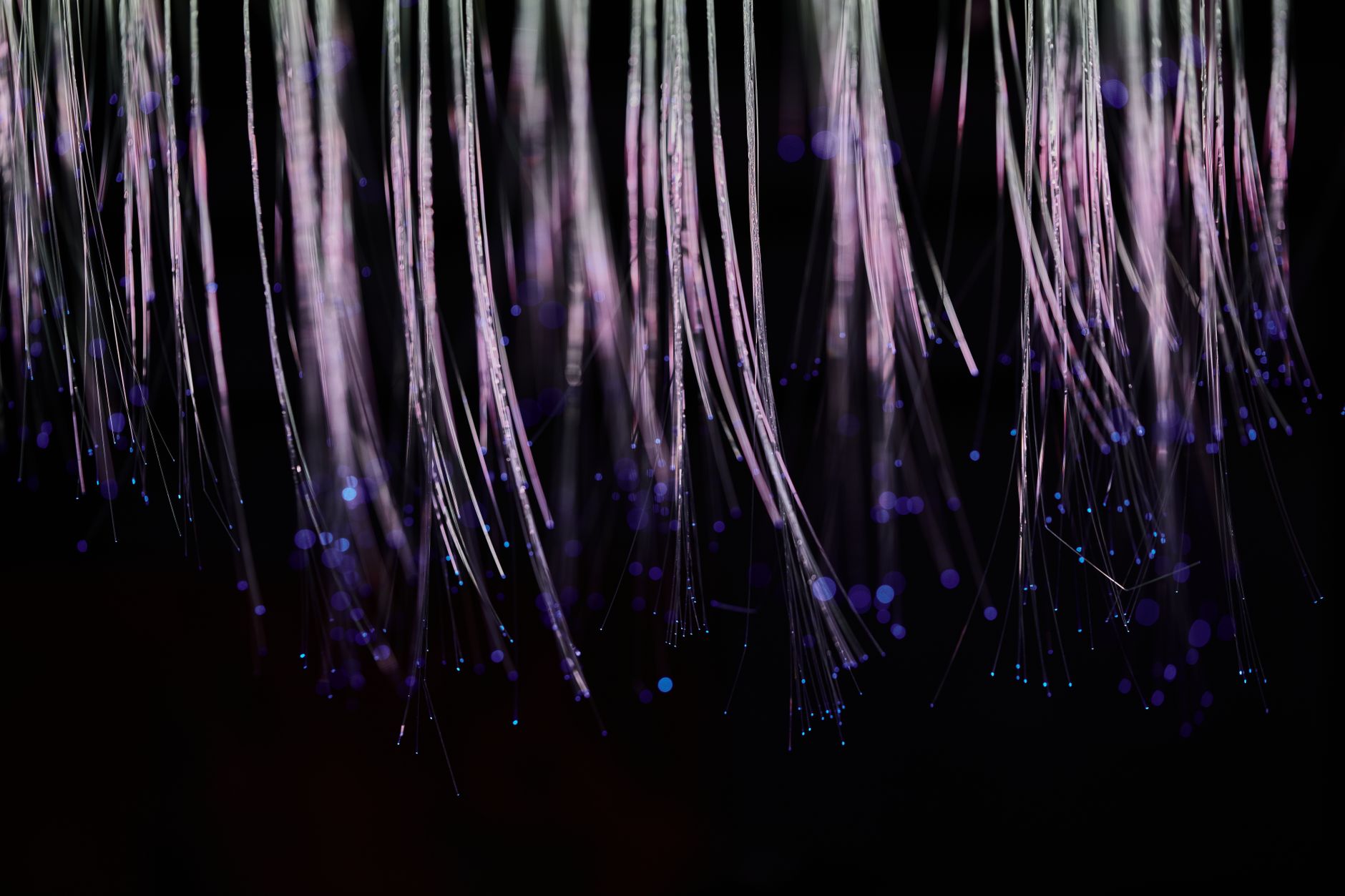
In a revelation that challenges our fundamental understanding of light, scientists have managed to observe it slowing down, not in some far-flung corner of the universe, but within the microscopic confines of the nanoworld. This unexpected behaviour was documented during rigorous experiments involving nanoparticles, a realm where the rules of classical physics often bend under the strain of quantum phenomena.
For centuries, light has been synonymous with speed, a universal constant racing through the vacuum of space at 299,792 kilometres per second. Yet, within the nanoworld, it now appears that light can be coaxed into a more leisurely pace. Researchers, employing sophisticated techniques, have manipulated light's speed by altering its interaction with nanoparticles, creating scenarios where light's velocity is significantly reduced.
A New Understanding of Light
This breakthrough carries profound implications for the future of science and technology. By controlling light's speed, we unlock new potentials in fields such as optics and telecommunications. Imagine fibre-optic cables that can transmit data more efficiently, or lasers that can be fine-tuned for unprecedented precision. The ability to slow light could lead to innovations in imaging technologies, enabling us to see the world in ways previously deemed impossible.
Dr. Emily Clarke, a leading physicist in the study, remarked, "What we've observed is not just a curiosity. It opens doors to technological advancements that could redefine how we harness light." Indeed, this could mark the beginning of a new era where the manipulation of light at the nanoscale becomes a cornerstone of modern engineering.
Implications and Future Prospects
While the immediate applications are still under exploration, the scientific community is abuzz with speculation. Could this discovery lead to breakthroughs in quantum computing, where controlling light is paramount? Or perhaps in the development of more efficient solar cells, where light management is key to energy conversion?
The research team plans to delve deeper into this phenomenon, hoping to unravel further mysteries of light's behaviour. As Dr. Clarke aptly put it, "We are only beginning to scratch the surface of what's possible." The coming years will undoubtedly see a surge in research aimed at unlocking the full potential of this intriguing discovery.