Stephen Hawking's 1971 Black Hole Prediction Proven True
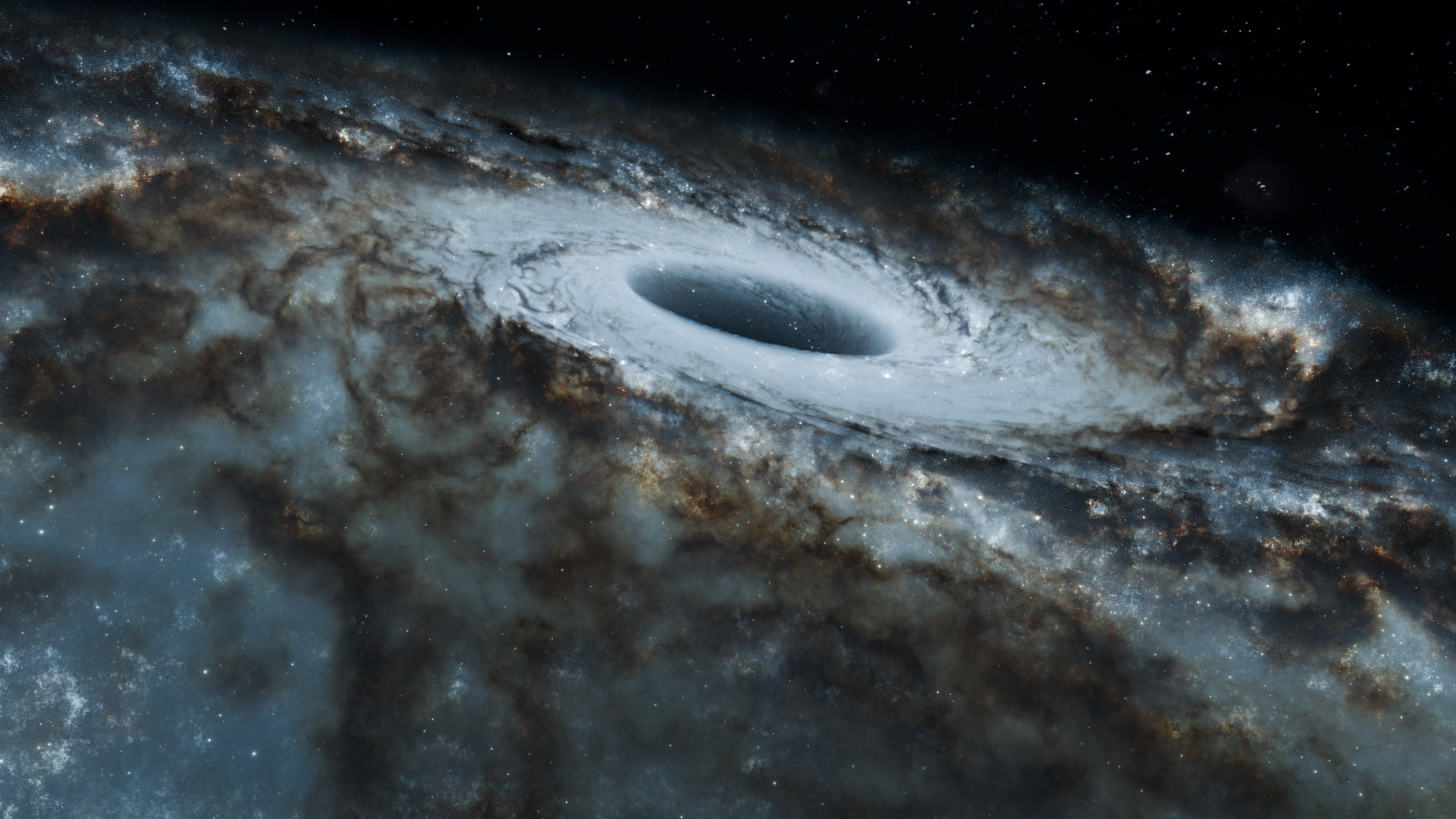
In a cosmos teeming with mysteries, a cosmic collision has just lent credence to one of Stephen Hawking's most intriguing predictions. It was a prediction made in 1971, and now, half a century later, the universe has provided the evidence. Two black holes, locked in a gravitational embrace, collided 1.3 billion light-years away, sending ripples through the fabric of spacetime.
These ripples, known as gravitational waves, were detected by the LIGO observatory, confirming a fundamental aspect of Hawking's theory about black holes. He posited that black holes should emit radiation, a notion that seemed almost fantastical at the time. Yet here we are, with the universe whispering its secrets into human ears.
The Dance of Titans
When the two black holes merged, they unleashed an astronomical amount of energy, equivalent to several times the mass of our Sun, but in gravitational waves. This cosmic ballet was not just a spectacle but a testament to the predictive power of theoretical physics. Hawking's insights, coupled with Einstein's earlier predictions on gravitational waves, are now cemented as cornerstones of our understanding of the universe.
The detection of gravitational waves itself was a landmark achievement. First observed by LIGO in 2015, these ripples have opened an entirely new window on the cosmos, allowing scientists to observe phenomena that were previously beyond reach. The recent confirmation of Hawking's theory further underscores the importance of these observations.
Implications for Modern Physics
Hawking's contribution to black hole thermodynamics is profound, offering a framework that unites quantum mechanics and general relativity. This latest confirmation not only reinforces his theories but also propels further research into the enigmatic nature of black holes. It highlights the intricate tapestry of physics that governs our universe.
As scientists continue to decipher the implications of this discovery, one can only marvel at the foresight of a mind like Hawking's. His work remains a guiding light in the quest to understand the cosmos, a testament to human curiosity and the relentless drive to uncover the universe's hidden truths.