Stephen Hawking's 1971 Prediction Validated by Distant Cosmic Collision
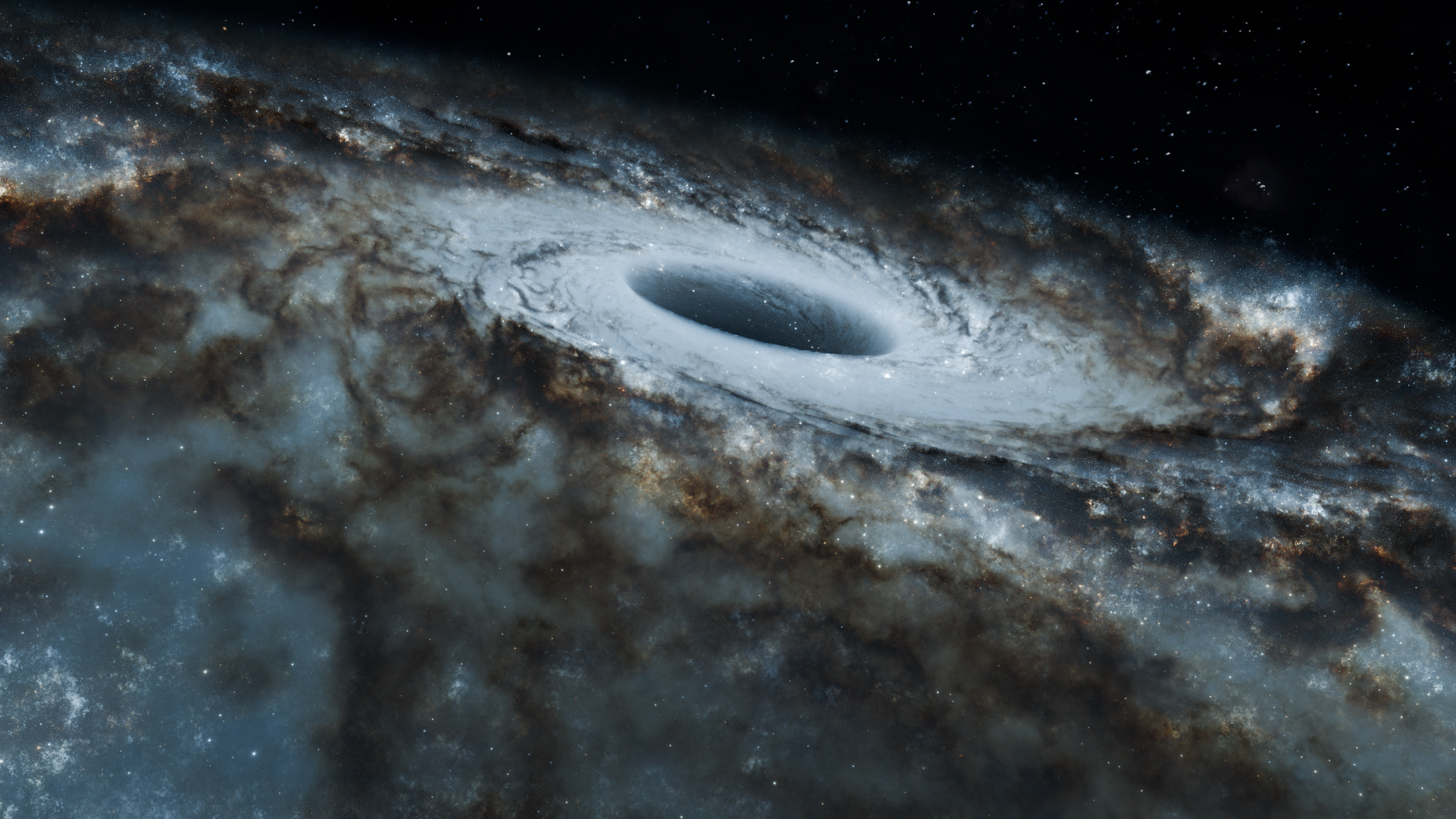
In a celestial event that has sent ripples through the scientific community, a prediction made by Stephen Hawking in 1971 has been dramatically confirmed. A collision between two colossal black holes, located approximately 1.3 billion light-years from Earth, has resulted in the detection of gravitational waves—an extraordinary phenomenon first theorised by Hawking.
The Laser Interferometer Gravitational-Wave Observatory (LIGO) was at the forefront of this breakthrough. By meticulously measuring the minute distortions in space-time caused by the merging black holes, the observatory provided tangible evidence of Hawking's hypothesis. The reverberations of this cosmic clash were detected as gravitational waves, phenomena that had eluded direct observation until their initial detection in 2015, also by LIGO.
The Significance of Hawking's Prediction
Stephen Hawking, a luminary in theoretical physics, posited that black holes would emit radiation due to quantum effects near their event horizons—phenomena now termed 'Hawking radiation'. While this particular prediction pertains to a different aspect of black holes, the confirmation of gravitational waves fortifies the frameworks within which Hawking's theories were developed.
This cosmic collision does more than validate a single prediction. It reinforces the bedrock principles of Einstein's theory of general relativity, showcasing the elegance of theoretical physics as it aligns with observable phenomena. The event provides an observational cornerstone, offering insights into the dynamics of black holes and the extreme conditions in which they exist.
A New Chapter in Astrophysics
The implications of this discovery extend beyond academic circles, capturing the public imagination with the allure of exploring the cosmos. For scientists, it is a step closer to unravelling the mysteries of the universe, where the macroscopic and quantum worlds converge. As we continue to capture these faint whispers from the cosmos, humanity stands on the brink of understanding the profound complexities of space-time.
In honouring Hawking's legacy, this discovery underscores the relentless pursuit of knowledge that defines scientific endeavour. It serves as a testament to the power of human curiosity and the enduring quest to comprehend the universe in all its enigmatic glory.