Vijay's Cinematic Politics: A New Era in Tamil Nadu
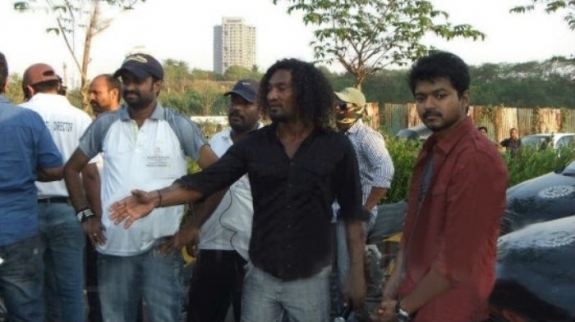
In the labyrinthine corridors of Tamil Nadu's political theatre, a new star has emerged, not from the traditional political dynasties but from the silver screen. C. Joseph Vijay, a name synonymous with Tamil cinema, has transformed his on-screen charisma into a formidable political force. His party, Tamilaga Vetri Kazhagam (TVK), has successfully forged a coalition government, unseating the long-standing dominance of the Dravida Munnetra Kazhagam (DMK) and All India Anna Dravida Munnetra Kazhagam (AIADMK).
Vijay's journey from reel to real politics has been nothing short of cinematic. Known for his mass appeal and larger-than-life roles, he has captivated the electorate, particularly the youth, who see in him a fresh alternative to the entrenched political elites. His ascent to power as Tamil Nadu's first Christian Chief Minister is both symbolic and substantive, signalling a shift in the state's socio-political fabric.
A Coalition of Change
Vijay's political success is not merely a tale of personal charisma. His strategic acumen in forming alliances with the Congress, Left parties, Viduthalai Chiruthaigal Katchi (VCK), and Indian Union Muslim League (IUML) has been pivotal. This coalition represents a broad spectrum of political ideologies, unified by a shared vision for change and development in Tamil Nadu.
Beyond Tamil Nadu, TVK is eyeing expansion into neighbouring Kerala, establishing district units and laying the groundwork for future electoral battles. This regional ambition marks a departure from traditional Tamil political parties, which have largely confined their aspirations within state boundaries.
Cinema and Politics: An Unlikely Alliance
Vijay's rise underscores the deep interconnection between cinema and politics in Tamil Nadu. This phenomenon is not unprecedented; the state has a storied history of actors transitioning into politics, with figures like M.G. Ramachandran and J. Jayalalithaa paving the way. However, Vijay's approach is distinct, blending cinematic appeal with a modern political narrative that resonates with the aspirations of a new generation.
As the dust settles on the recent elections, one thing is clear: Tamil Nadu is witnessing a new brand of politics, one that melds the allure of cinema with the realities of governance. Whether this experiment will endure the tests of time and policy remains to be seen, but for now, the stage is Vijay's, and the audience is enthralled.