After Higgs Boson: The Large Hadron Collider's Next Quest
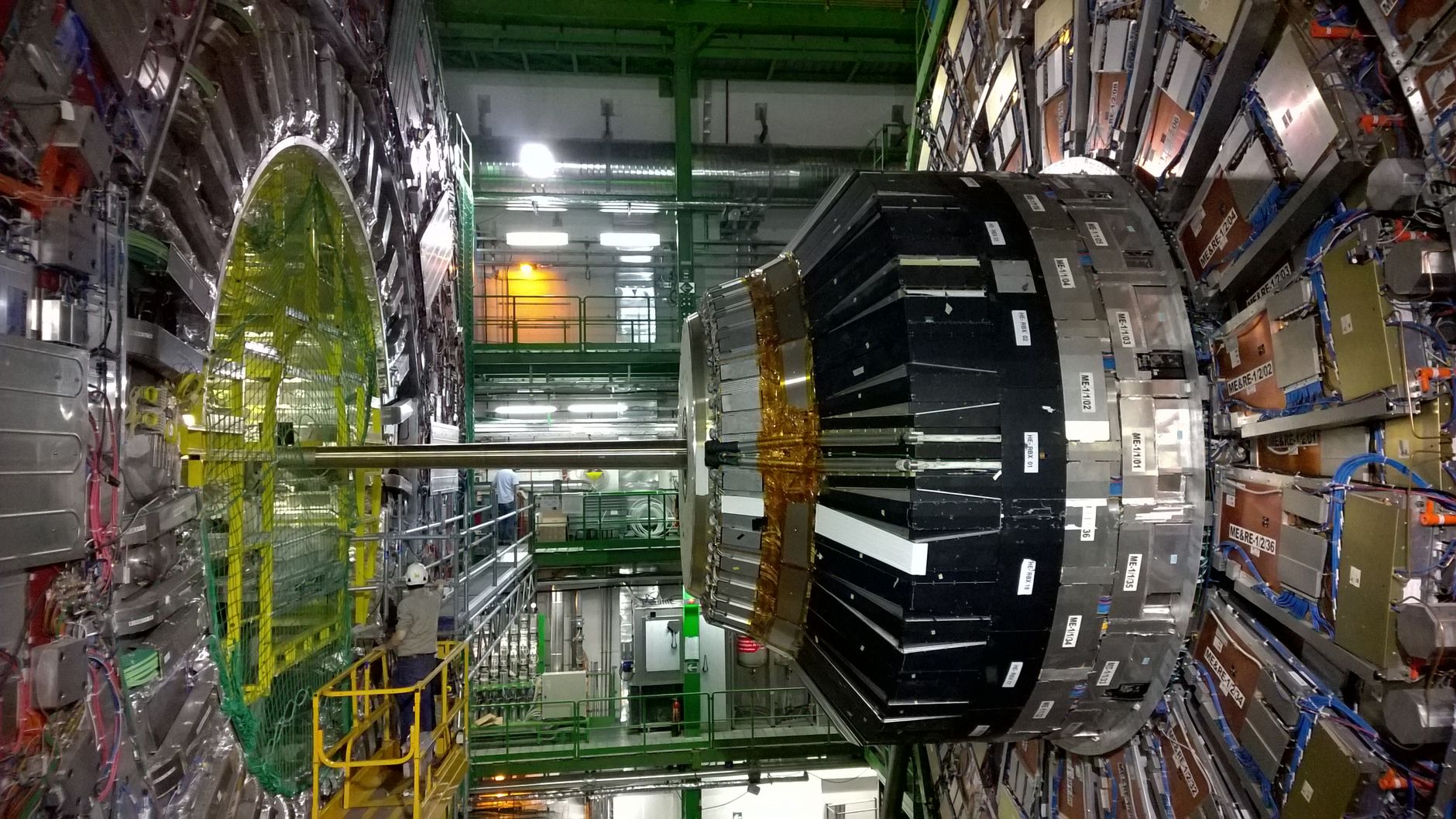
In the world of high-energy physics, the Large Hadron Collider (LHC) stands as a colossal monument to human curiosity. Its tunnels, stretching beneath the Franco-Swiss border, have not only unearthed the elusive Higgs boson but also opened a veritable Pandora's box of questions about the universe.
As the LHC shutters its operations for a four-year hiatus, the scientific community finds itself at a crossroads. The pressing question is whether the unprecedented achievements justify the construction of an even grander machine. The discovery of the Higgs boson in 2012 was a triumph, earning a Nobel Prize for Professor Peter Higgs and his team. However, the LHC's next phase aims to probe deeper mysteries, like dark matter and the potential existence of parallel universes.
The Quest for the Unknown
Physicists like John Ellis from CERN are vocal about the possibilities that lie ahead. 'We've only scratched the surface,' he asserts, pointing towards phenomena that could redefine our understanding of physics. The LHC's future endeavours are not just about finding new particles, but about peering into the very fabric of reality. Yet, the costs are staggering, and not everyone is convinced that a larger collider is the answer.
The scientific world is divided. Some argue that the focus should shift towards smaller, more efficient experiments, while others believe in the promise of a new supercollider, capable of energies far surpassing the LHC. The debate is not solely scientific; it's political and financial as well. With funding for science under scrutiny globally, every pound and euro spent needs justification.
Beyond the LHC: A New Frontier?
The potential of discovering new realms of physics is tantalising. The detection of gravitational waves has already added a new dimension to our cosmic understanding. The LHC's successor could similarly transform our grasp of the universe. But as it stands, the LHC remains a beacon of hope and curiosity, its beams dimmed temporarily, yet its spirit undeterred.
The next few years will likely determine the path forward. Whether through a new supercollider or innovative smaller-scale experiments, the quest to understand the universe continues unabated. For now, the LHC rests, a giant in slumber, awaiting its next call to discovery.