Hubble Captures Rare Comet Breakup in Real Time
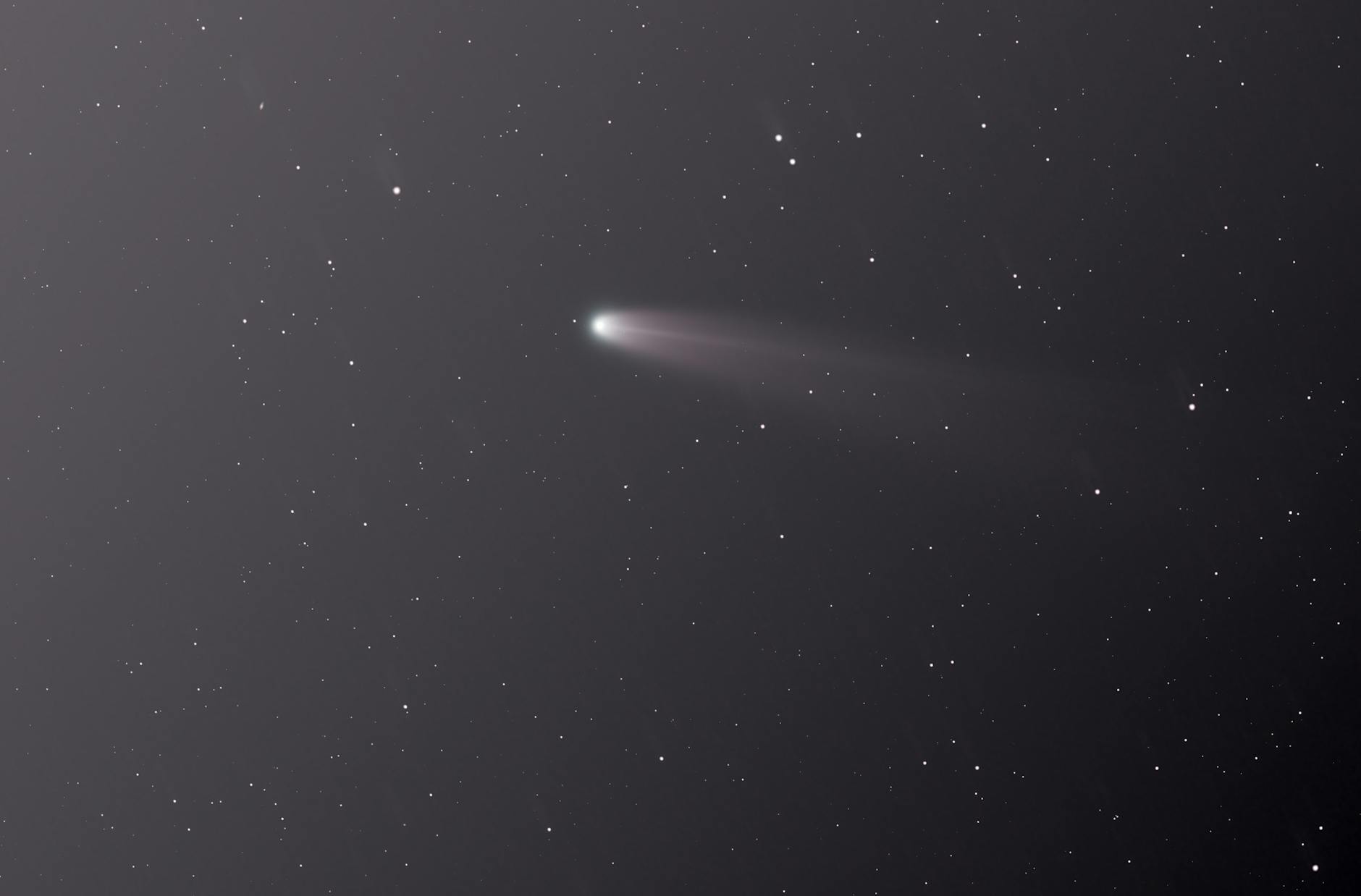
In a striking cosmic spectacle, NASA's Hubble Space Telescope has captured comet C/2025 K1 (ATLAS) breaking apart in real time, revealing a scene of celestial disintegration that is as rare as it is fascinating. The event was observed unexpectedly, offering astronomers a unique opportunity to study the comet's demise in unprecedented detail.
As the Hubble's Space Telescope Imaging Spectrograph (STIS) trained its gaze on what was expected to be a singular celestial object, scientists were greeted with the sight of four distinct comets, each carrying its own luminous coma. Dr Noonan, one of the astronomers involved, described the discovery as "something really, really special". Such enthusiasm is not unwarranted, as the chances of witnessing a comet's disintegration in real time are exceedingly slim.
Comets, often referred to as 'dirty snowballs', are composed of ice, dust, and rocky material. When they venture close to the sun, the heat causes these icy bodies to release gas and dust, forming a glowing coma and often a tail. However, the complete fragmentation of a comet is an elusive phenomenon, typically occurring far from the prying eyes of scientific instruments.
The Science Behind the Spectacle
The breakup, captured in a series of high-resolution images, provides invaluable insights into the structural integrity and composition of cometary bodies. Each fragment of the disintegrating comet carried its own coma, suggesting a uniformity in composition. This rare glimpse into the internal workings of a comet could help scientists refine models of cometary evolution and behaviour.
While the exact cause of C/2025 K1's fragmentation remains unknown, possibilities include thermal stress from solar heating or an internal build-up of gas pressure. The fragments of the comet, now drifting apart, present an uncommon chance to observe the aftermath of such a cosmic event.
A Striking Moment for Astronomers
The accidental observation underscores the importance of constant monitoring in space exploration. It serves as a reminder of the unpredictable nature of the universe and the ever-present potential for discovery. As scientists continue to analyse the data, the world watches, captivated by the drama unfolding millions of kilometres away.
For astronomers, this event not only enriches their understanding of cometary physics but also fuels the eternal quest for knowledge about our solar system's ancient wanderers. As one scientist eloquently put it, "Every fragment tells a story, and we're eager to listen."