Hubble's Latest Image Reveals a Cosmic Dance of Galaxies
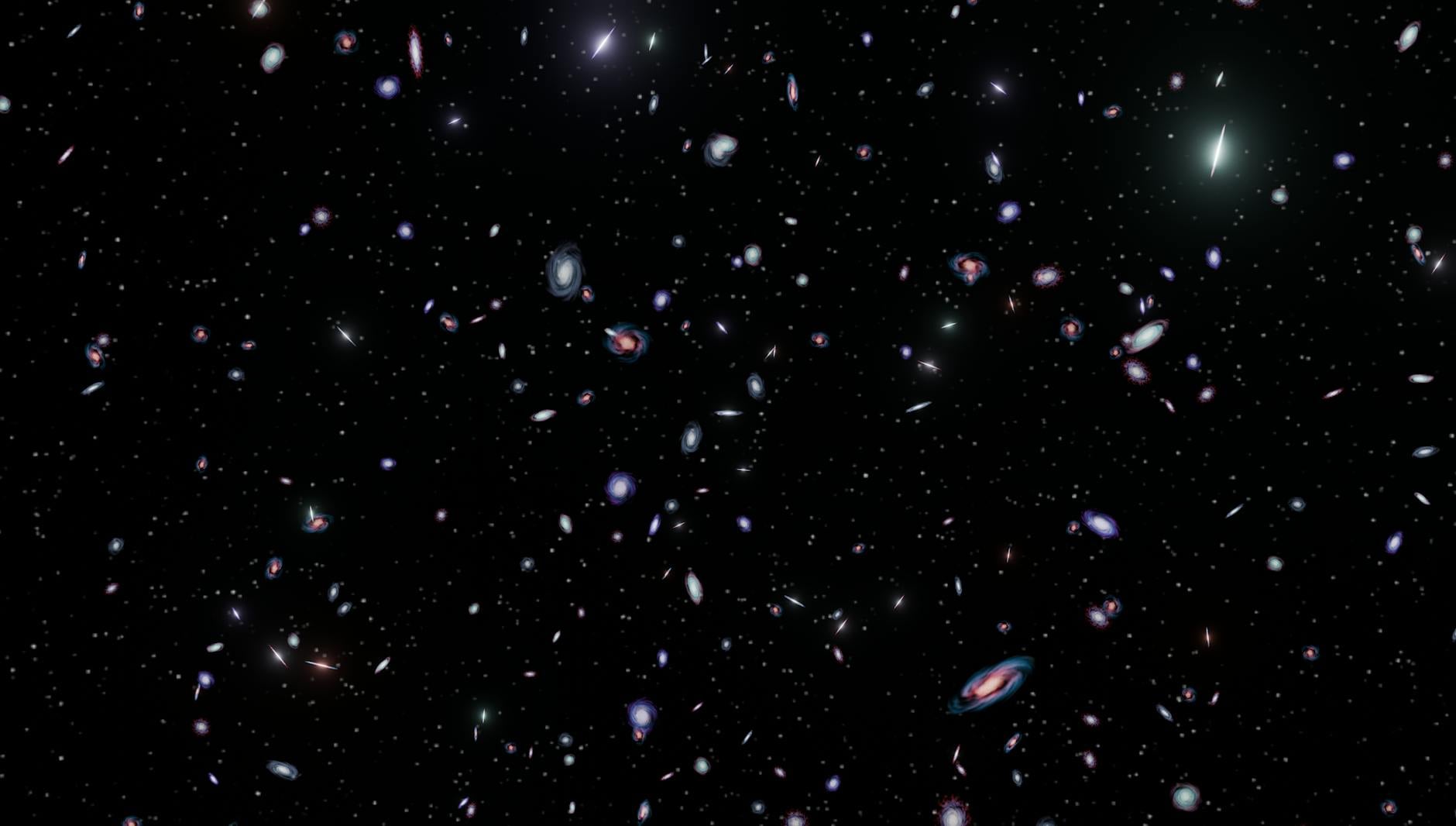
In a dazzling display of cosmic choreography, the Hubble Space Telescope has once again captured the imagination of astronomers and enthusiasts alike. This time, it has turned its gaze towards the galaxy cluster known as MACS J1141.6-1905, a celestial ensemble that is as mesmerising as it is mysterious.
The image, a composite of visible and infrared light, reveals a scene where gravitational forces play a leading role. The cluster itself is not merely a collection of galaxies; it is a cosmic magnifying glass. The gravity here is so intense that it bends and amplifies the light from galaxies that lie far beyond, a phenomenon known as gravitational lensing.
The Dance of Light and Gravity
Gravitational lensing is not just a scientific curiosity. It provides astronomers with a unique tool to peer deeper into the universe than ever before. The light from distant galaxies, often too faint to detect otherwise, is bent and magnified by the gravity of the cluster, allowing scientists to study their properties with astonishing clarity.
This particular observation was made possible through two Hubble observing programmes, each focusing on the luminous X-ray emissions that massive galaxy clusters like MACS J1141.6-1905 emit. These emissions are crucial for understanding the behaviour of dark matter, a mysterious substance that makes up the bulk of the universe's mass yet remains invisible.
Unveiling Dark Matter's Secrets
Dark matter does not emit, absorb, or reflect light, making it undetectable by conventional means. However, its presence is inferred from the gravitational effects it has on visible matter, such as the galaxies in this cluster. The gravitational lensing effect observed by Hubble is a testament to the hidden mass of dark matter that lurks within.
The image of MACS J1141.6-1905 thus serves as a cosmic Rosetta Stone, offering clues into the enigmatic nature of dark matter. As scientists continue to analyse the data, each discovery brings us a step closer to solving one of the universe's greatest mysteries.
For now, the image stands as a reminder of the beauty and complexity of the cosmos—a place where light and gravity dance in an eternal ballet, choreographed by the unseen forces of the universe.