Peering into the Abyss: Unveiling Black Hole Event Horizons
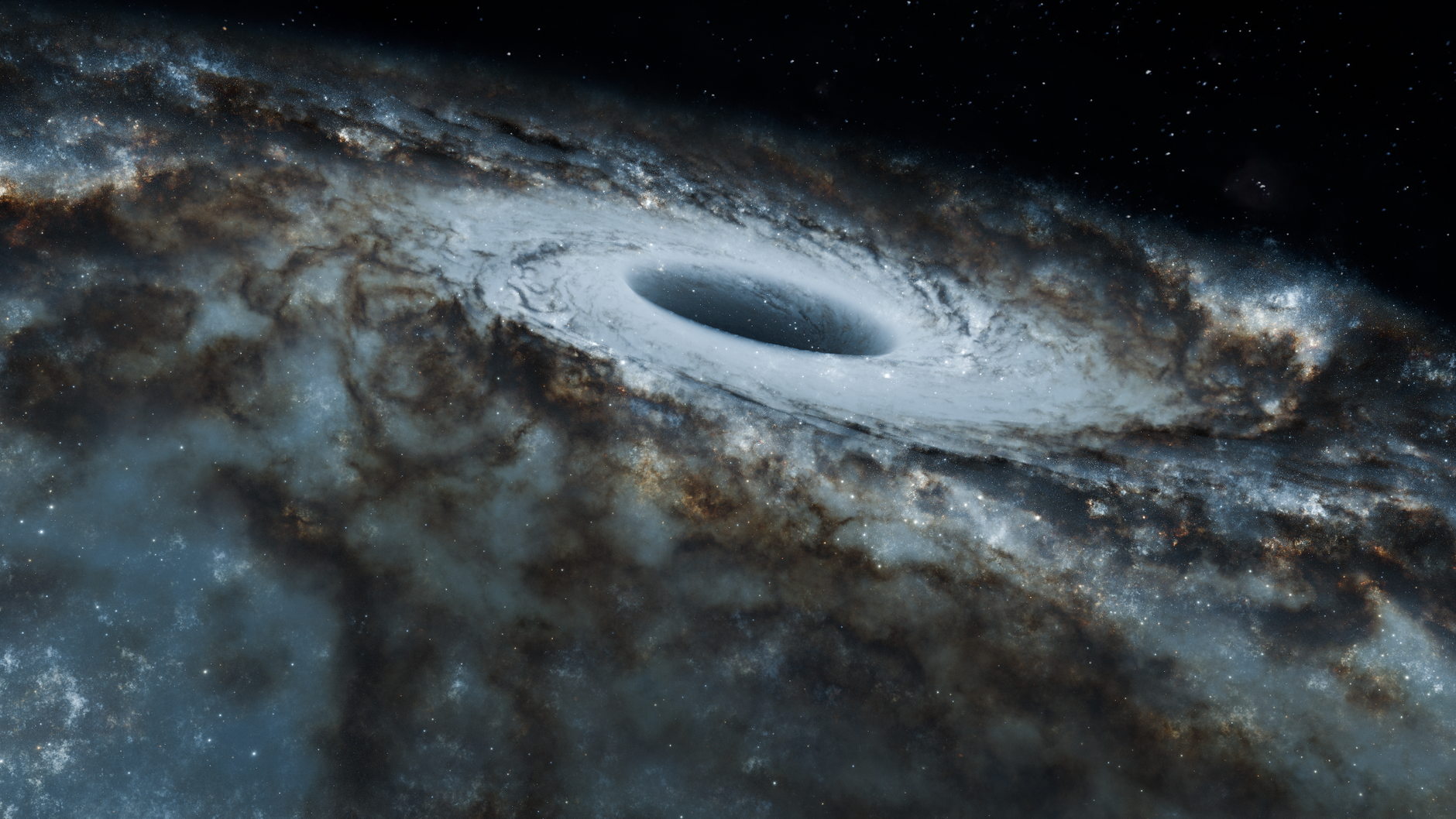
In a universe filled with mysteries, few are as captivating as the event horizon of a black hole. Recent advances in astrophysics have now brought this enigmatic boundary into clearer focus. By utilising gravitational waves, the ripples in spacetime caused by massive cosmic events like colliding black holes, scientists are able to study these elusive phenomena more closely than ever before.
The event horizon marks the point of no return, where the gravitational pull becomes so intense that not even light can escape. It is not a surface in the traditional sense, but rather a boundary enclosing the singularity and the immense mass that forms a black hole. This boundary, theoretically predicted by Einstein over a century ago, had remained largely impenetrable—until now.
The Role of Gravitational Waves
Gravitational waves have emerged as a vital tool in this exploration. These waves, first directly detected in 2015, are now being used to test the predictions of general relativity under the most extreme conditions. When two black holes merge, they send out gravitational waves that can be detected by observatories on Earth. These waves carry with them the 'signature' of the event horizons involved, providing a unique glimpse into their nature.
By analysing these waves, researchers can infer properties of the event horizon, such as its size and shape, and test the fundamental laws of physics as they apply to such extreme environments. This process not only affirms the robustness of Einstein's theories but also opens new avenues for understanding the behaviour of matter and energy in the most extreme conditions imaginable.
Implications for Our Understanding of the Universe
Studying event horizons could revolutionise our understanding of black holes and the universe at large. These investigations may lead to insights about the formation and evolution of galaxies, the behaviour of quantum mechanics at cosmic scales, and perhaps even the nature of space and time itself.
While the study of black holes remains a daunting task, each new discovery peels back another layer of the cosmos' most profound mysteries. As scientists continue to probe these celestial giants, we move ever closer to understanding the fundamental mechanics of the universe. The implications of these studies extend far beyond academic curiosity, potentially transforming our grasp of the cosmos and our place within it.