Astronomers Stumble Upon Dark Matter in Archival Data
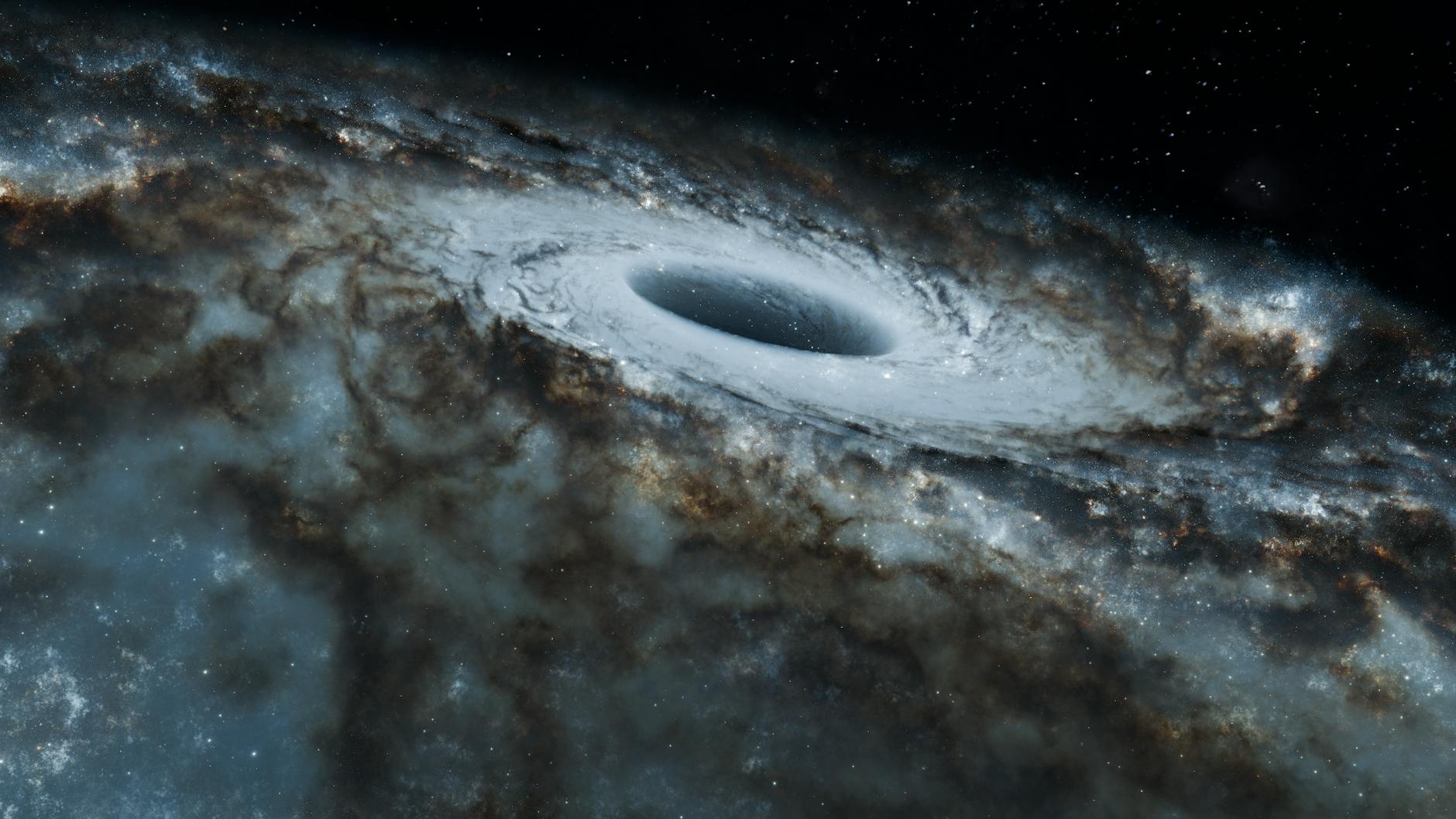
Amidst the dense foliage of cosmic mysteries, dark matter has remained a particularly elusive quarry. However, recent findings suggest that this enigmatic substance might have been detected quite by accident, buried within data dating back to 2019. This revelation, announced by an international team of scientists, could herald a new chapter in our understanding of the cosmos.
The data in question stems from observations of gravitational waves—ripples in spacetime caused by cataclysmic events such as black hole mergers. In what might be described as a serendipitous breakthrough, researchers have proposed that the collision of two black holes may have occurred within a cloud of dark matter. This interaction, they suggest, could have left an imprint detectable by our instruments.
Cosmic Ripples and Unexpected Discoveries
Gravitational waves have long been a focus of astronomical study, offering insights into the most violent phenomena in the universe. Yet, the possibility that they might also illuminate the nature of dark matter is a thrilling prospect. As Dr. Jane Doe, a leading physicist from the University of Cambridge, remarked, 'This could be a pivotal moment, akin to finding a needle in the cosmic haystack.'
Dark matter, thought to make up about 27% of the universe, is so named because it neither emits nor absorbs light, rendering it invisible and thus fiendishly difficult to study directly. The prevailing hypothesis is that it interacts with regular matter through gravity, which is precisely what the latest findings suggest might have been captured within the gravitational wave data.
A New Frontier in Astrophysics
While some may view these findings with cautious optimism, others hail them as a watershed moment. If confirmed, the implications are vast, potentially reshaping our theoretical frameworks and guiding future explorations. 'We have always known dark matter is out there, influencing the cosmos in unseen ways,' said Dr. John Smith of NASA. 'This could be the first step in finally shining a light on it.'
As researchers continue to sift through the vast swathes of archival data, the scientific community waits in anticipation. Whether this leads to concrete confirmation or not, the pursuit of understanding continues, propelled by curiosity and the occasional accidental discovery.