Astronomers Unveil Atmosphere on Distant Icy Body
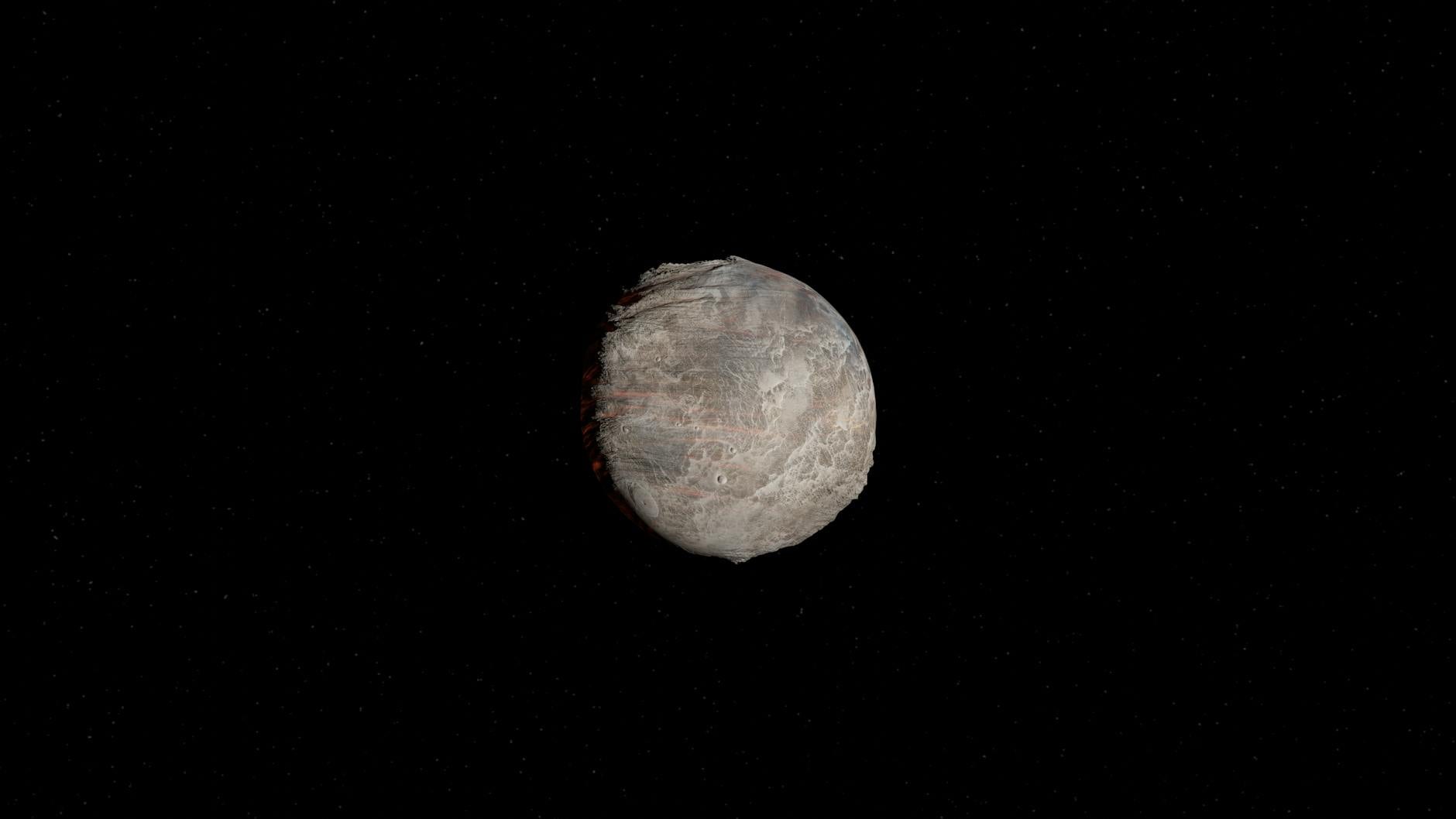
In a revelation that has left astronomers both perplexed and exhilarated, a fragile atmosphere has been detected around a small, frozen object in the Kuiper Belt, a region of the solar system far beyond the orbit of Pluto. This object, (612533) 2002 XV93, is roughly 500 kilometres in diameter, making the presence of any atmosphere quite unexpected given its diminutive size and frigid temperatures.
The discovery was made by a team of astronomers based in Japan, who utilised advanced telescopic technology to identify the atmospheric presence. The findings challenge existing notions about the capabilities of small icy worlds to retain atmospheres, a characteristic previously thought to be reserved for larger celestial bodies within the solar system.
Challenging Established Beliefs
Traditionally, it has been assumed that objects of such modest size and extreme cold lack the gravitational pull necessary to hold onto atmospheric particles. However, the presence of an atmosphere around 2002 XV93 suggests that there may be other mechanisms at play, potentially involving complex interactions between solar radiation, surface volatility, and perhaps even unknown geological processes.
This discovery opens new avenues for research into the dynamic processes of the outer solar system. It forces scientists to reconsider previous models and theories regarding the formation and evolution of atmospheres on small rocky bodies. The implications extend beyond mere academic interest; they might also reshape our understanding of how similar processes could operate on exoplanets in other star systems.
New Questions Arise
While the discovery is groundbreaking, it leaves astronomers with more questions than answers. What exactly constitutes this atmosphere? How does it manage to persist despite the object's limited ability to gravitationally retain such particles? And what role does the broader Kuiper Belt environment play in this phenomenon?
As researchers delve deeper into these mysteries, the atmosphere of 2002 XV93 stands as a poignant reminder of the vast unknowns that still pervade our understanding of the universe. Each discovery in the depths of space not only answers existing questions but invariably leads to new ones, fuelling the perpetual quest for knowledge among scientists and astronomers worldwide.