Celestial Ballet: Understanding the Rare Planetary Alignment
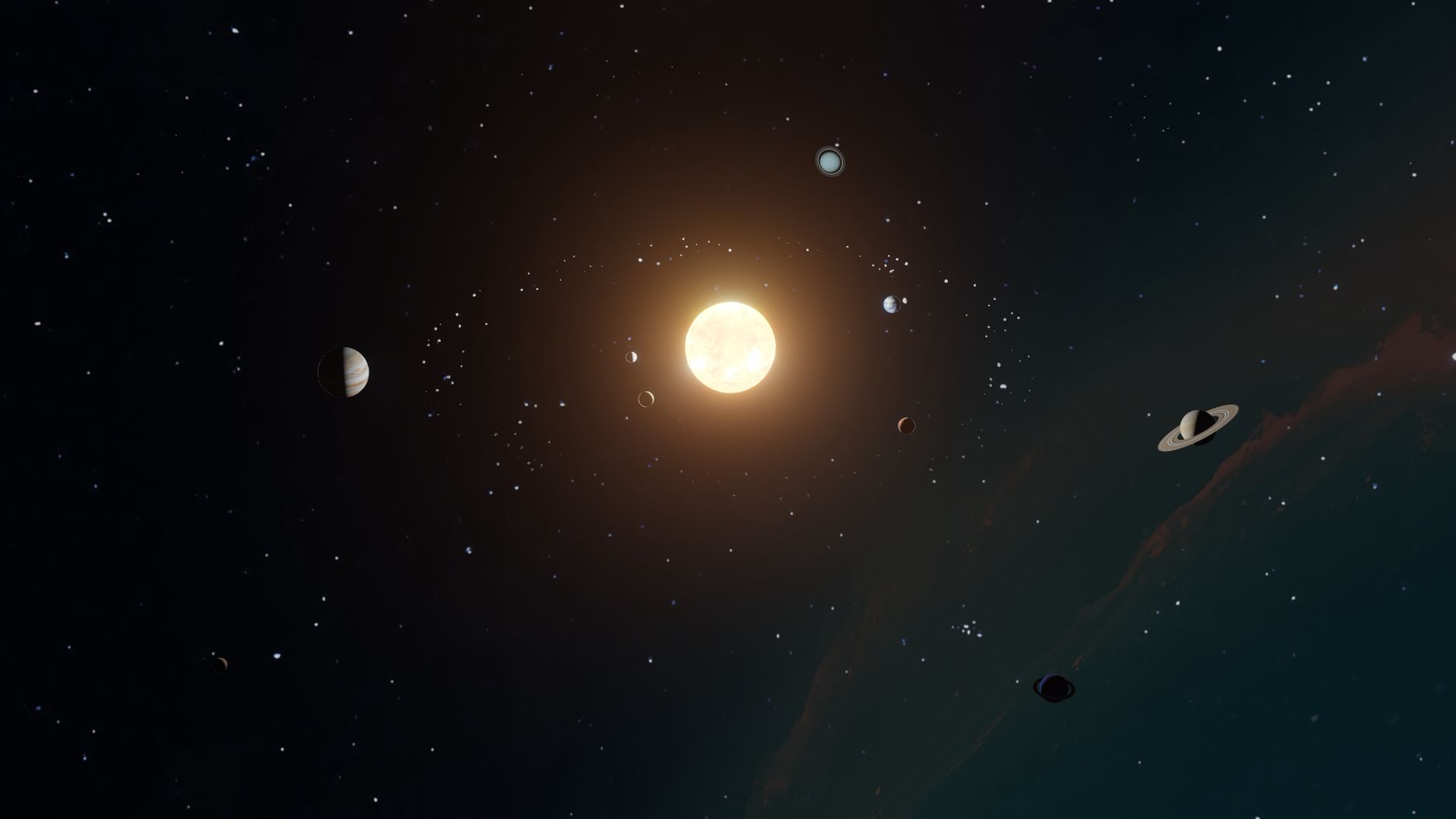
As the night sky prepares to unveil a rare spectacle, astronomers around the world are setting their telescopes to capture a glimpse of a celestial alignment that will not grace our skies again for another fifteen years. This multi-planet alignment, often seen as a cosmic ballet, involves several planets lining up in a single row from Earth's perspective, offering a vision both humbling and awe-inspiring.
The Mechanics of Alignment
Planetary alignments occur due to the orbital paths of the planets around the sun, which occasionally bring them into a straight line relative to Earth. While the exact number and order of planets vary with each alignment, this particular event includes a prominent line-up of Mars, Jupiter, and Saturn. Such alignments are rare due to the differing orbital speeds and paths of the planets, making this occurrence a significant event for both professional astronomers and amateur stargazers.
Understanding these alignments requires a grasp of celestial mechanics—the branch of astronomy that deals with the motions of celestial objects. The alignment offers insights into gravitational interactions and the dynamic nature of our solar system. For scientists, it is an opportunity to study gravitational effects more closely, using the planets' positions to test models of planetary motion and gravitational theories.
A Spectacle for All
Beyond the scientific implications, the alignment is a reminder of our place in the universe. It encourages both young and old to look up and marvel at the celestial choreography unfolding above. In an age dominated by screens and digital distractions, such natural phenomena serve as a poignant reminder of the wonders that lie beyond our immediate perception.
For those keen to witness this event, clear skies and minimal light pollution will be key. While the naked eye can provide a view of the alignment, binoculars or a small telescope can enhance the experience, revealing the planets in more detail.
Whether you're a scientist eager to conduct research or a casual observer enchanted by the stars, this planetary alignment is a moment not to be missed. It is a celestial reminder of the beauty and complexity of the universe, and a prompt to reflect on humanity's place within it.