Dark Matter's Hidden Hand: Gravitational Waves Reveal Secrets
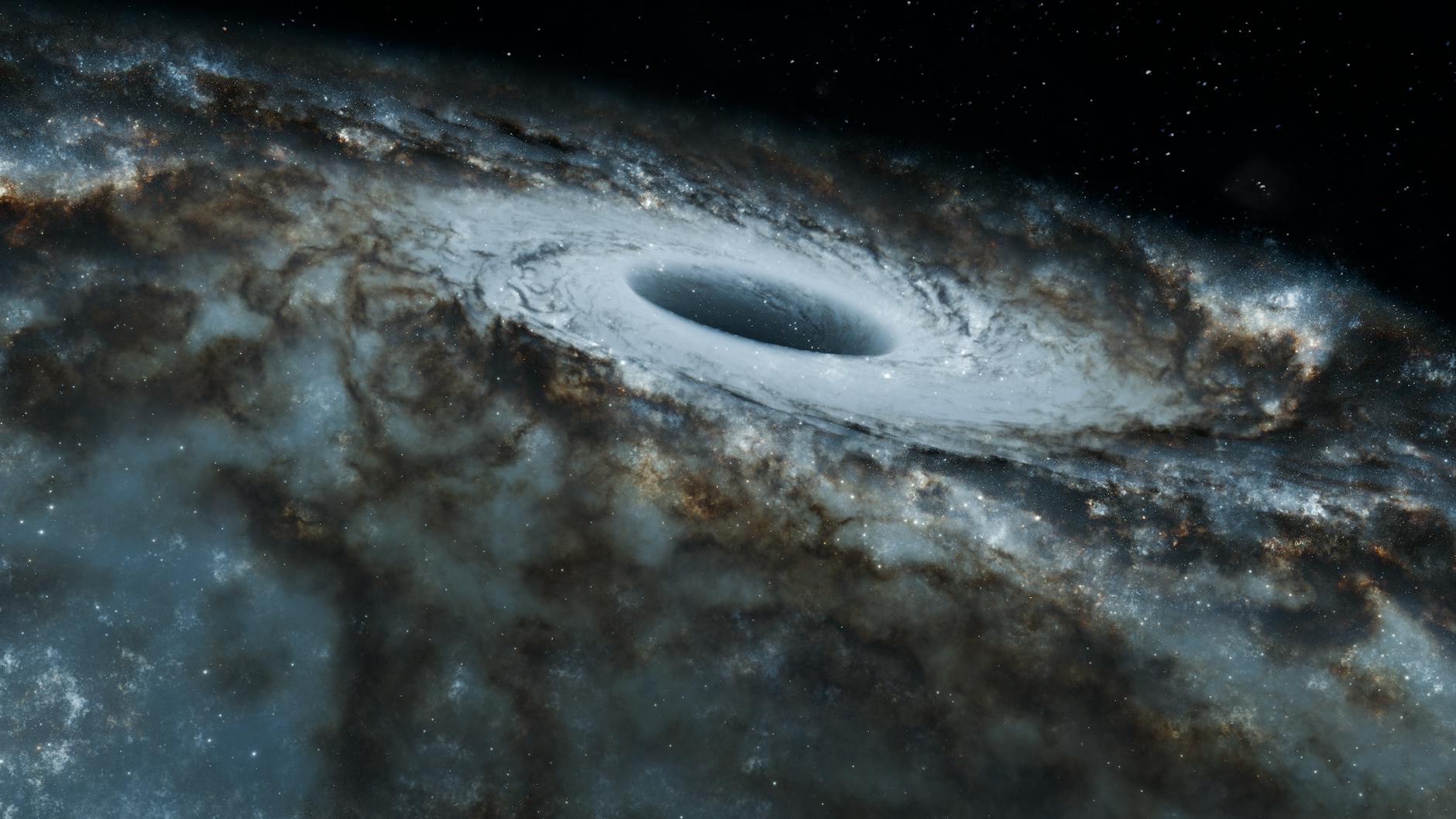
In a development that could reshape our understanding of the cosmos, researchers have suggested that gravitational waves might carry an imprint of dark matter. This tantalising hypothesis arises from the study of data captured by the LIGO-Virgo-KAGRA collaboration from an event identified as GW190728.
Gravitational waves, the ripples in spacetime caused by violent cosmic events, have long been a source of fascination. However, this new study posits that as these waves traverse regions dense with dark matter, they might pick up subtle signatures of this mysterious substance. Black holes, when they spiral and merge, could thus be acting as cosmic archaeologists, unearthing clues about the universe's hidden mass.
A New Approach to an Old Mystery
Dark matter, which makes up approximately 27% of the universe, has been notoriously difficult to detect directly. Its existence is inferred from gravitational effects on visible matter, radiation, and the large-scale structure of the universe. If gravitational waves indeed carry dark matter's imprint, it would provide an innovative method to study this elusive phenomenon.
Dr. Emily Thompson, a leading physicist involved in the study, remarked, "We're standing on the brink of potentially uncovering a new aspect of dark matter's interaction with the universe." Yet, she advises caution, stressing that "more observations and rigorous analysis are essential before we can claim any definitive discovery."
Implications for Future Research
Should this theory be validated, the ramifications could be profound. Not only would it bolster our understanding of dark matter, but it might also refine the methodologies employed in gravitational wave astronomy. The fusion of these two branches of astrophysics could herald a new era of cosmic exploration.
While the promise of such a discovery is exhilarating, the scientific community remains pragmatic. The road to confirming dark matter's imprint in gravitational waves is fraught with challenges, not least the need for further data and improved detection techniques. Nevertheless, the potential rewards make this an endeavour worth pursuing.