Hubble's Celestial Ballet: A Galaxy Swarm Unveiled
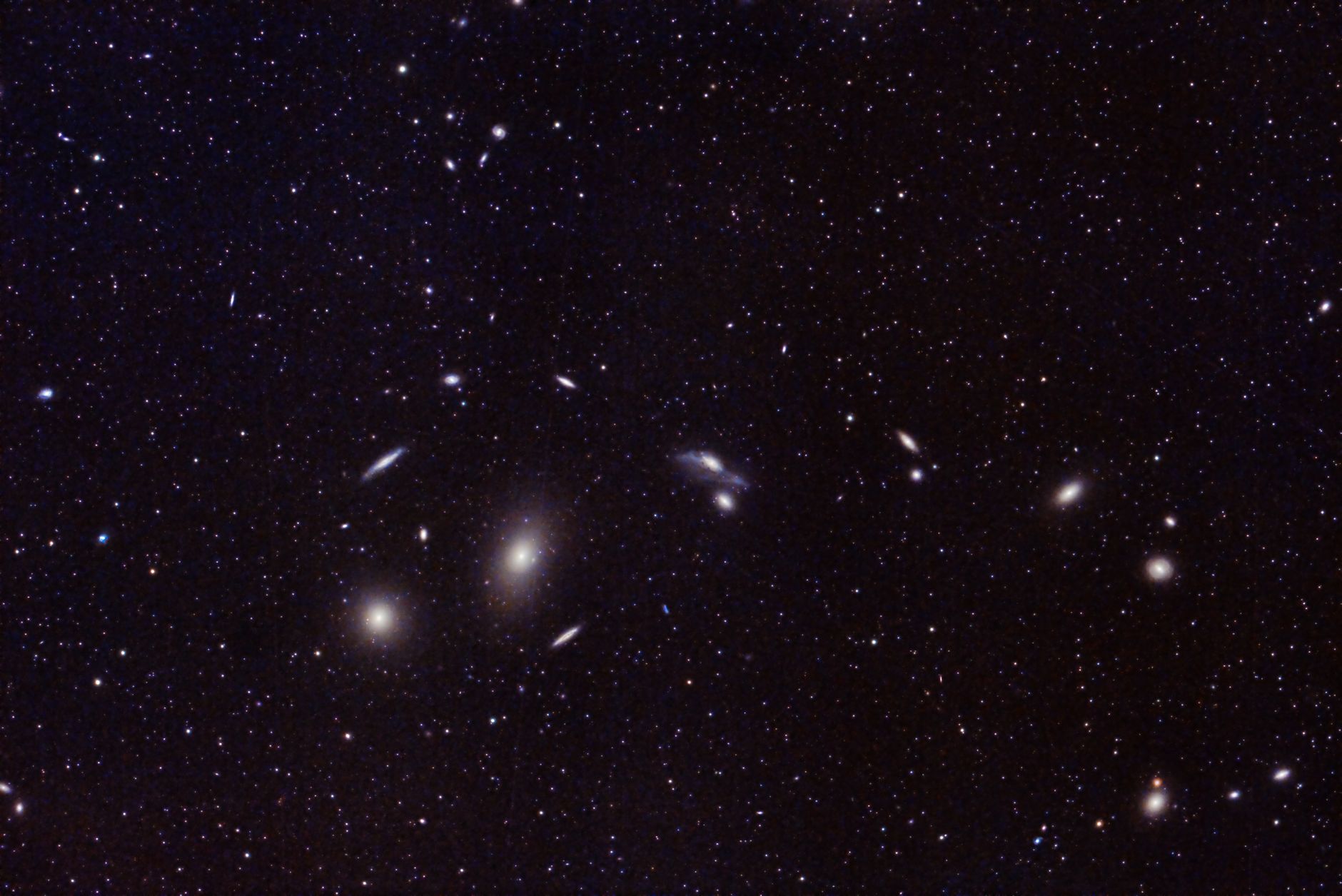
In a spectacular display of cosmic choreography, the Hubble Space Telescope has once again turned its gaze towards the far reaches of the universe, unveiling a swarm of galaxies that delight both astronomers and enthusiasts alike. This latest image, a captivating mosaic of cosmic structures, reveals a tapestry woven with large, smooth elliptical galaxies and slender, edge-on spirals.
The elliptical galaxies, with their bright and smooth ovals, dominate the centre of the image, exuding an aura of timeless elegance. In contrast, the thin spiral and lenticular galaxies, viewed from the edge, add a dynamic flair, their forms suggesting motion even in the stillness of space.
Amongst this celestial assembly, the full, face-on view of spiral galaxies stands out with their majestic spiralling arms. These spirals, reminiscent of cosmic pinwheels, are a testament to the gravitational ballet that governs the universe. Observing these galaxies from different perspectives allows scientists to better understand the diverse forms and structures that galaxies can take.
A Window into the Past
Each galaxy in this swarm serves as a window into the past. Given the vast distances involved, the light from these galaxies has travelled millions of years to reach us, offering a glimpse into an epoch of cosmic history long gone. This time-travel aspect of astronomy is what makes the study of galaxies so compelling; it's not just about observing what is, but also piecing together what was.
The Hubble's observations provide critical data for understanding galaxy formation and evolution. By studying such a diverse group of galaxies, scientists hope to unravel the mysteries of how these massive structures come into being and evolve over billions of years.
Beyond the Aesthetic
While the visual appeal of such images is undeniable, their scientific value is equally significant. The data gathered from these observations help astronomers construct models of galaxy formation and behaviour, contributing to our broader understanding of the universe's architecture.
As the Hubble continues to capture such breathtaking images, it reaffirms its role as an indispensable tool in the quest for cosmic knowledge. Each photograph is not merely an image but a chapter in the ongoing story of the universe, where every galaxy is a protagonist in its own right, with its own tale to tell.