Jupiter's Role in Earth's Elemental Origins: A New Perspective
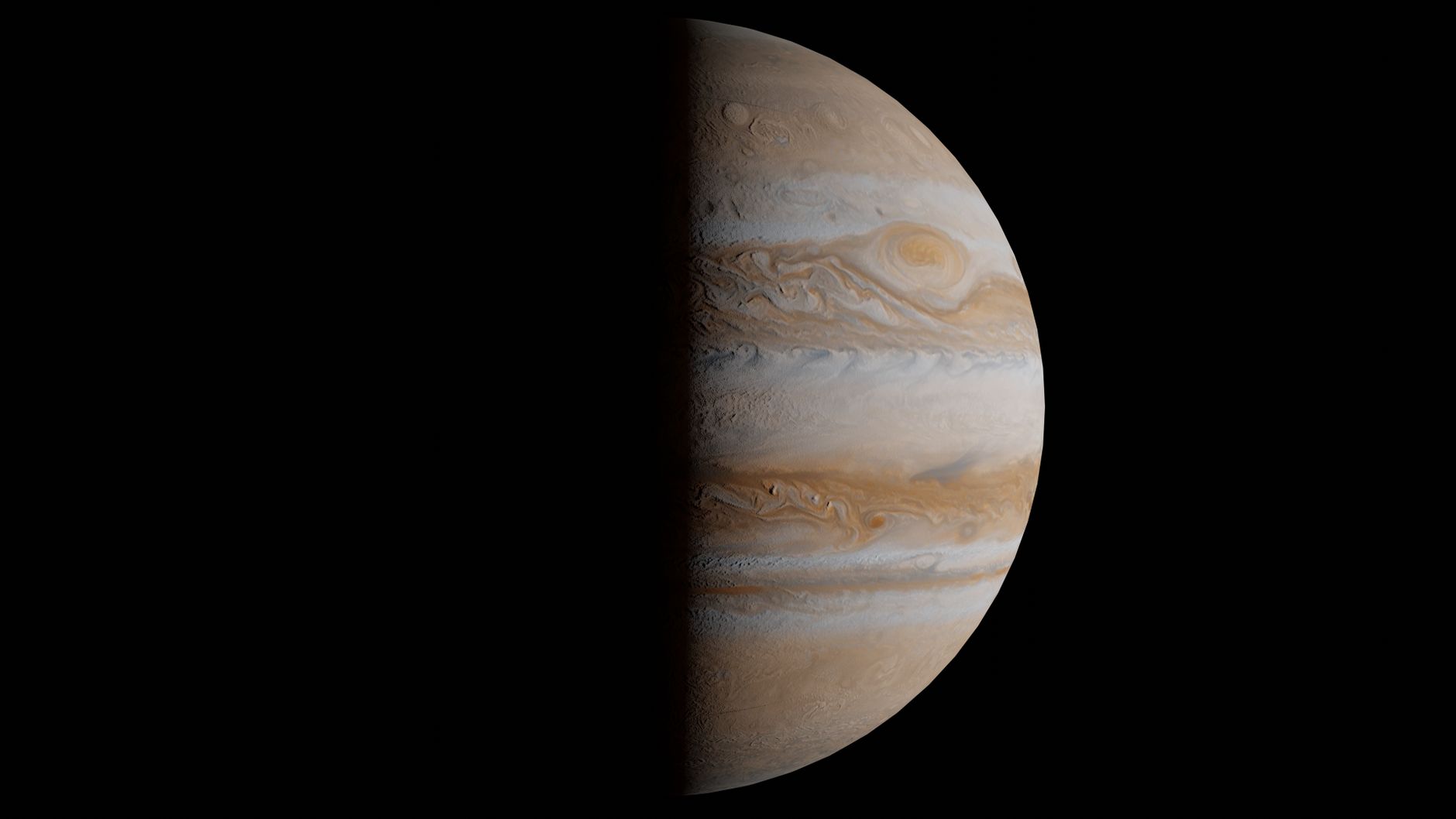
In a revelation that could alter our cosmic narrative, NASA-supported scientists have identified a celestial twist in Earth's formative story. Their findings, published in the journal Science Advances, propose that Jupiter, the gas giant traditionally seen as a distant onlooker, may have played a pivotal role in delivering the essential ingredients for life to our nascent planet.
At the heart of this research lies the intriguing interplay between phosphorus and nitrogen – two elements indispensable for life as we know it. The study suggests that these elements were likely not imported from far-flung regions beyond Jupiter, as previously thought, but originated primarily from the inner sanctum of our Solar System.
The Jovian Connection
Jupiter's gravitational influence, often regarded as a cosmic barrier against celestial debris, might have, paradoxically, acted as a conveyor belt, redistributing vital elements across the young Solar System. This process, researchers argue, may have enriched the early Earth, setting the stage for life to flourish.
The study's authors examined the ratios of phosphorus to nitrogen, offering a fresh lens through which to view the volatile chemistry of our planet's early days. By analysing meteorites and planetary formation models, they have pieced together a narrative that places Jupiter as a critical player in this elemental saga.
Rethinking Planetary Formation
This revelation compels a re-examination of our understanding of planetary formation. It challenges the long-held belief that life's building blocks were primarily delivered from the icy realms of the outer Solar System. Instead, this research highlights the dynamic processes within the inner Solar System, reshaping the dialogue around planetary habitability.
As scientists continue to probe the mysteries of our Solar System's past, each new discovery brings us closer to understanding the complex choreography that led to life on Earth. The implications of this study are profound, inviting further exploration into the mechanisms that have shaped our cosmic neighbourhood.