Mars's Moon Phobos Faces Imminent Hazard from Self-Destruction
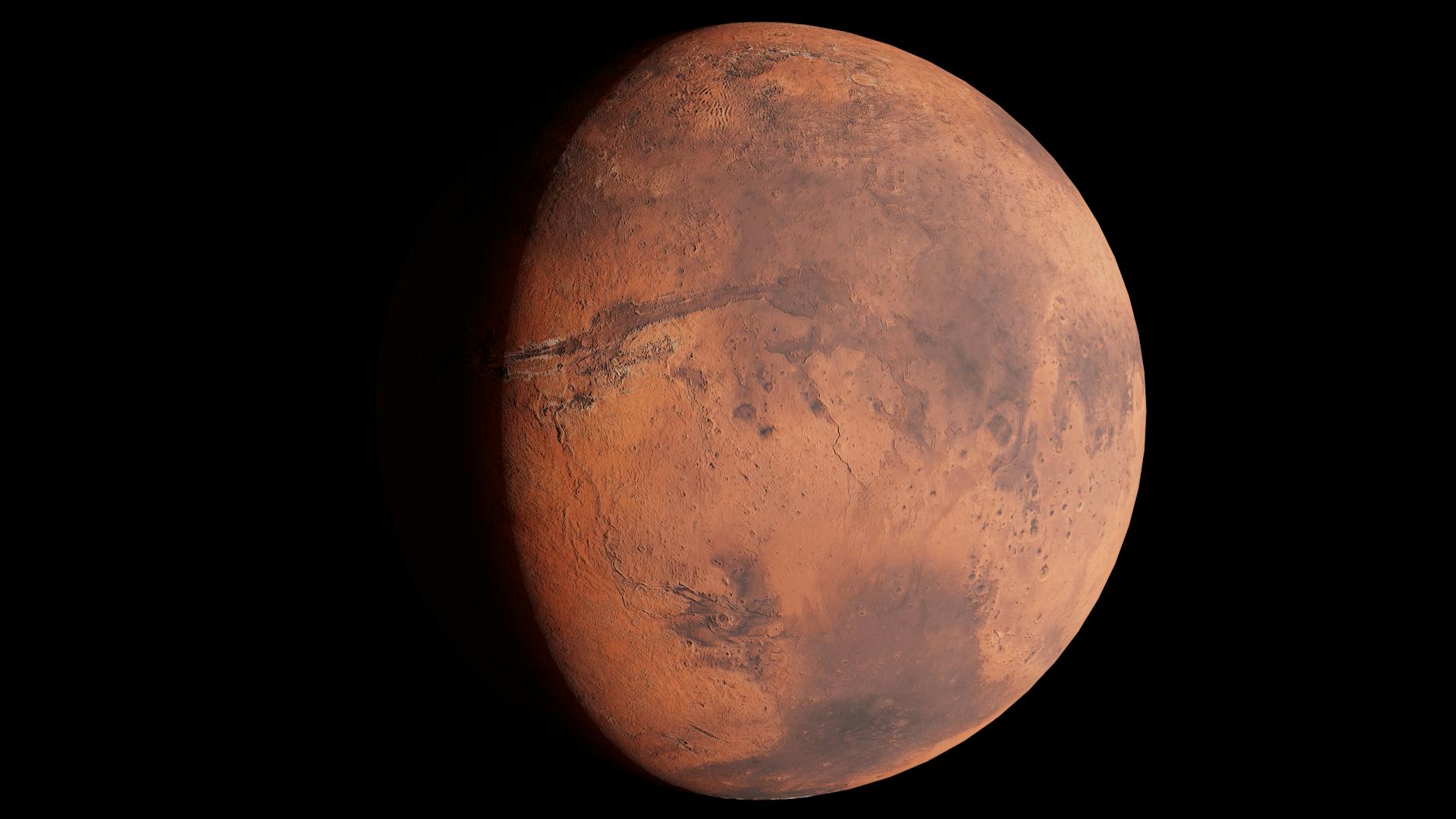
As Mars's enigmatic moon Phobos hurtles inexorably towards its planetary host, scientists are sounding the alarm about an impending cosmic calamity. The moon, a curious celestial body whose origins remain a subject of spirited debate, faces the grim prospect of self-annihilation long before it disintegrates entirely.
Phobos's trajectory towards Mars has long been a cause for concern. Every century, Mars's gravitational pull draws Phobos closer by about 6.6 feet. At this rate, the moon is expected to meet its demise in roughly 30 to 50 million years. However, recent analyses suggest that the end might come sooner than anticipated, courtesy of the moon's own debris.
Researchers posit that as Phobos edges closer to Mars, the tidal forces will exert such pressure that the moon will begin to shed material. This material, instead of simply dispersing into the Martian atmosphere, may rain back down onto the moon's surface, accelerating its disintegration.
The Origins Debate
The tale of Phobos and its smaller sibling, Deimos, has intrigued astronomers for decades. Some propose that these moons are captured asteroids, while others suggest they formed from debris following a colossal impact event on Mars. Despite these varying theories, one fact remains certain: the forces at play are steadily transforming Phobos into a cosmic time bomb.
Implications for Mars and Beyond
While the immediate impact on Mars is expected to be minimal, the potential fragmentation of Phobos could offer valuable insights into celestial dynamics. Observing such an event could help scientists understand similar processes elsewhere in the solar system, especially in the context of planetary ring formation and the behaviour of rubble-pile asteroids.
As Phobos continues its perilous journey, astronomers and space enthusiasts alike will watch with bated breath. The moon's fate may well serve as a cosmic reminder of the delicate balance that governs our universe.