Milky Way’s Black Hole Finally Reveals Its Spin
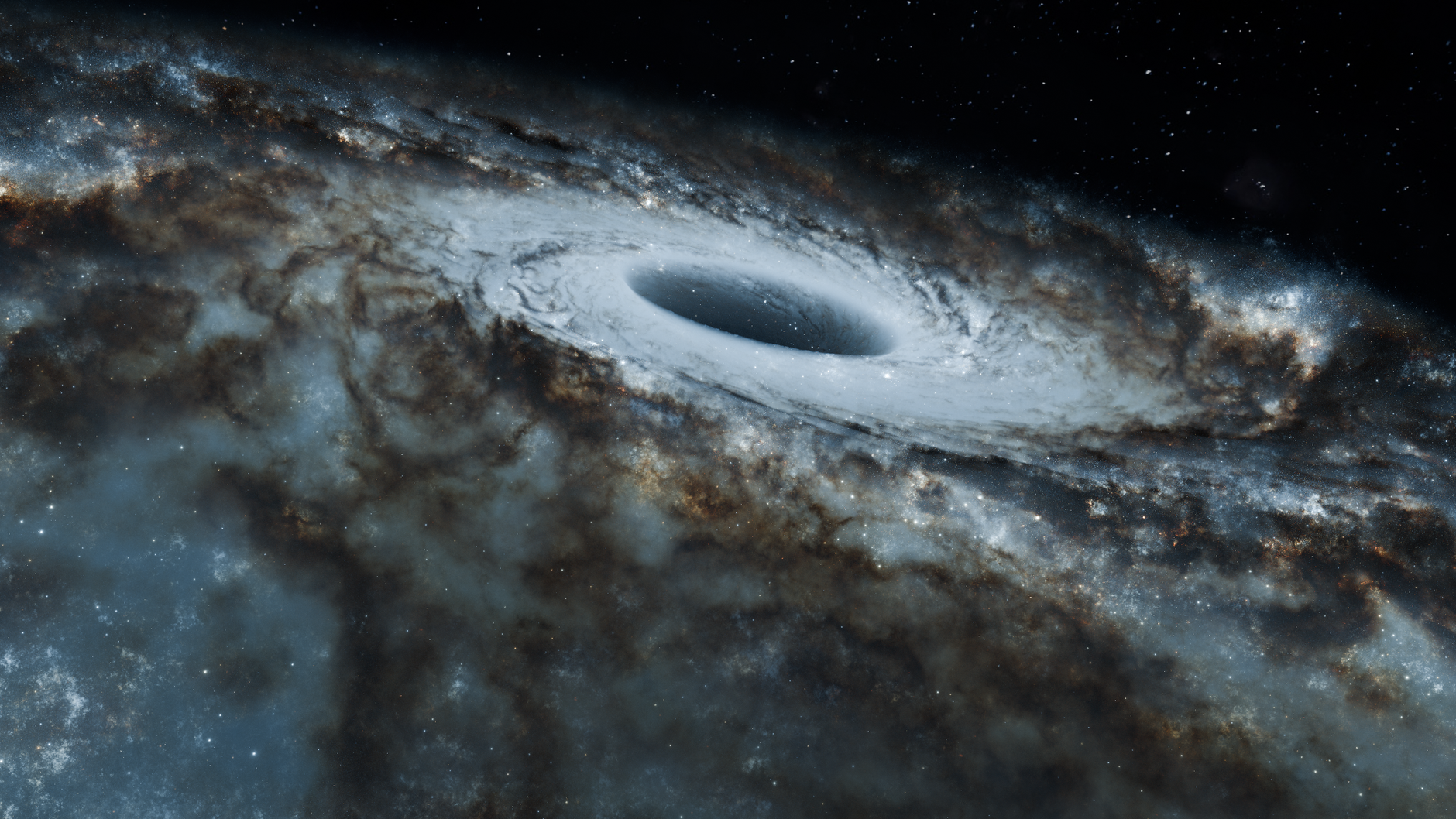
In a cosmic revelation that has eluded scientists for years, the Milky Way's supermassive black hole, known as Sagittarius A*, has finally revealed one of its most elusive features: its spin. Nestled at the heart of our galaxy, this colossal entity has long been a subject of intrigue and speculation.
For decades, astronomers have pondered over the characteristics of this black hole, which exerts a gravitational pull so intense that it shapes the movement of stars and other celestial bodies around it. Yet, one critical aspect remained obscured from view: the rate at which it spins.
The Significance of Spin
Spin is a fundamental property of black holes, akin to mass and charge. It influences everything from the black hole's gravitational pull to the way it interacts with its surrounding environment. Until now, measuring this spin had proven to be a formidable challenge.
The breakthrough came through the combined efforts of an international team of scientists using cutting-edge technology. By analysing the light distortion around Sagittarius A*, they were finally able to calculate its spin, revealing that it is rotating at nearly the maximum rate possible.
Implications for Cosmic Understanding
This discovery is more than a mere academic triumph. Understanding the spin of Sagittarius A* allows scientists to refine models of how our galaxy formed and evolved. It provides clues about the processes that might occur as interstellar gas accretes onto the black hole, potentially offering insights into the lifecycle of galaxies far beyond our own.
Moreover, this finding could have implications for the study of gravitational waves. As massive objects like Sagittarius A* spin, they create ripples in the fabric of space-time, which scientists detect as gravitational waves. Understanding the spin adds another piece to this complex cosmic puzzle.
Although the mysteries of black holes continue to intrigue and confound, this latest discovery marks a significant step forward in our quest to understand these enigmatic giants. As telescopes and technology advance, who knows what other secrets the universe might reveal?