NASA's Hematite Discovery Sheds Light on Ancient Martian Climate
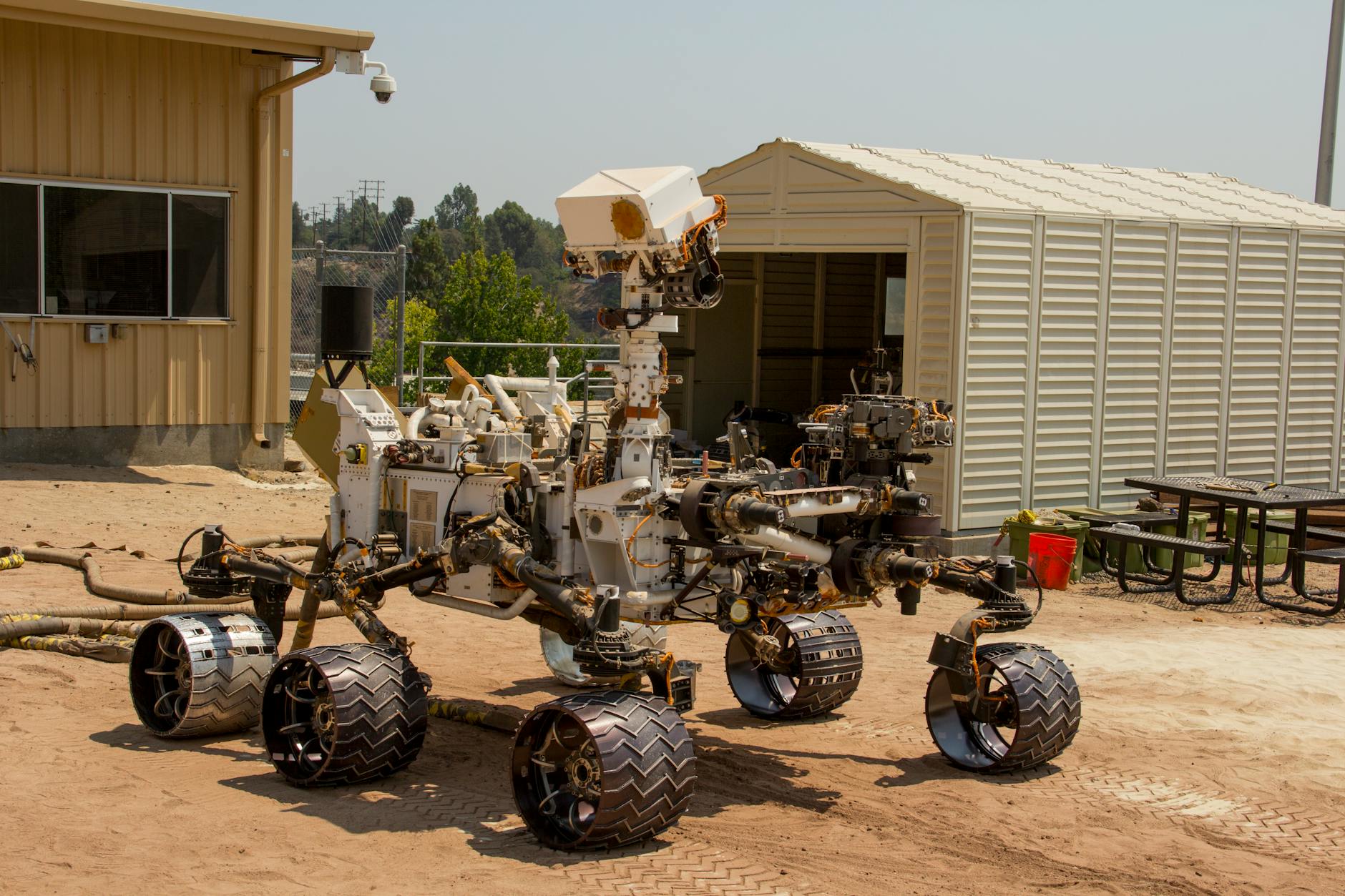
Perched atop Mount Sharp, NASA's Curiosity Rover has unearthed a secret long held by the Martian landscape. In a striking revelation, scientists have identified that variations in hematite crystallite sizes across different elevations might serve as a crucial marker for understanding the ancient climate of Mars.
Hematite, a mineral already known for its presence on Mars, now takes centre stage as a potential key to unlocking the climate mysteries of the Red Planet. The research, spearheaded by NASA, reveals that the crystallite sizes of hematite change according to the temperature conditions under which they form. This discovery provides a novel method to infer the climatic history of Mars, offering a glimpse into how the planet's environment has evolved over billions of years.
The rover's analysis of 20 Martian samples suggests that as one ascends the slopes of Mount Sharp, the differences in hematite crystallite sizes become apparent. This gradient is indicative of varied ancient climatic conditions, possibly hinting at periods of warmth and moisture that could have once supported microbial life.
A New Chapter in Martian Exploration
While the presence of water on ancient Mars has been a subject of speculation and indirect evidence, this new marker offers a more direct insight. Understanding the precise temperature and environmental conditions that gave rise to these hematite variations could significantly alter our perception of Mars's past.
NASA's findings not only enrich our understanding of Martian history but also enhance our methodologies in planetary science. By providing a tangible marker, scientists can now better model and predict the climatic shifts that Mars has undergone, thus refining our search for signs of past life.
As we continue to explore Mars, each discovery brings us closer to answering the age-old question of whether life once thrived on our neighbouring planet. The hematite marker might just be the breadcrumb trail leading us back to a time when Mars was not the barren world we see today.