NASA's Webb Telescope Unveils Intriguing 'Black Hole Stars'
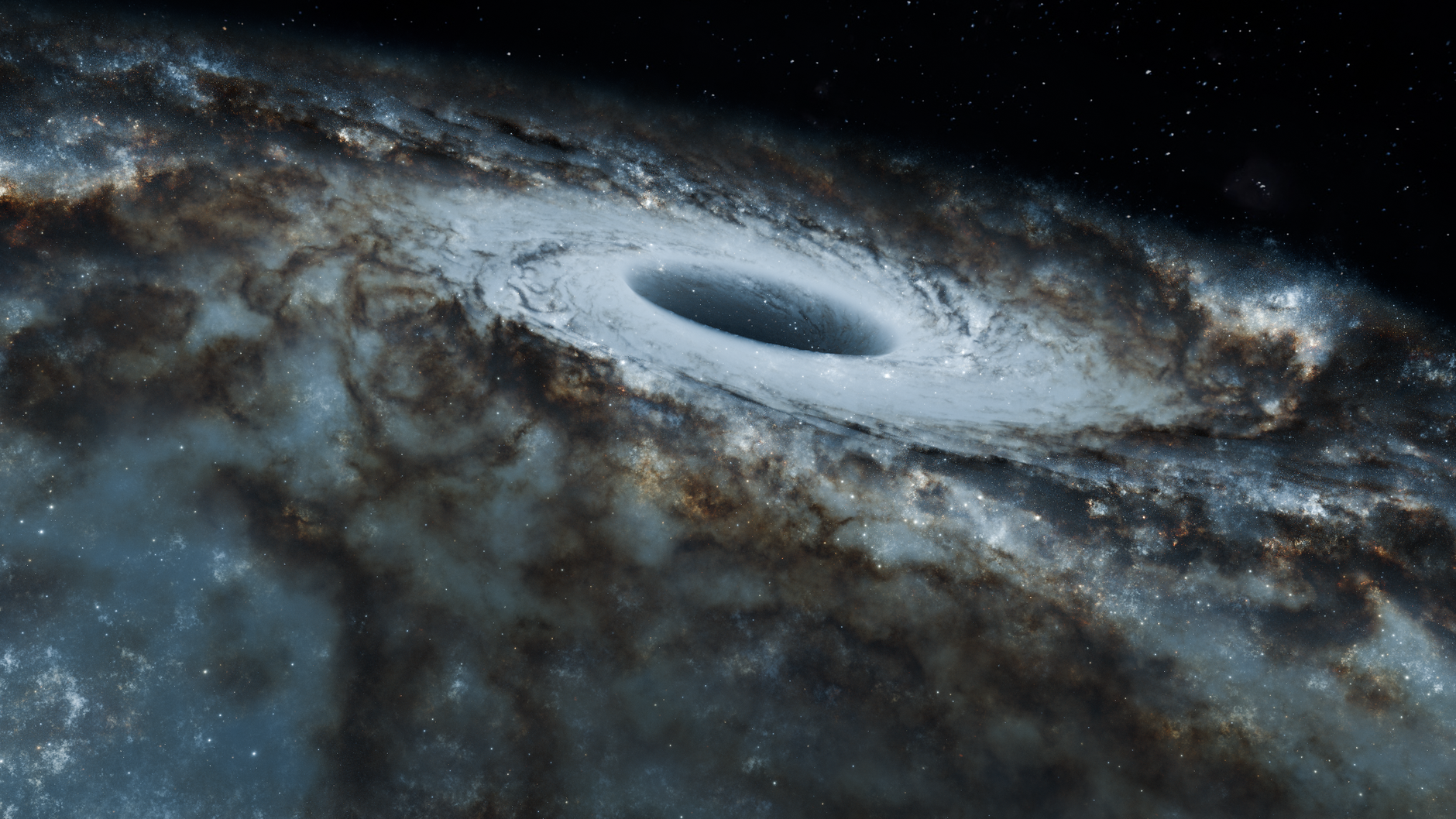
In the vast, enigmatic theatre of the cosmos, a new actor has taken centre stage — the 'black hole star'. The James Webb Space Telescope, NASA's cutting-edge eye on the universe, has uncovered the strongest evidence yet of these celestial phenomena, which until now remained largely speculative.
While peering into the depths of the galaxy cluster Abell S1063, astronomers were treated to a surprise performance by GLIMPSE-17775, an unassuming little red dot that has sparked considerable excitement. This celestial beacon is not merely a star; it may well be the first solid proof of a black hole star, a concept where the mass of the star is so immense that it forms a black hole at its core while still shining brightly.
The Evidence Unfolds
The Webb Telescope's observations revealed a series of spectral lines that align perfectly with theories predicting the existence of black hole stars. These lines suggest a high concentration of mass and energy, characteristics that are typically attributed to black holes. But unlike traditional black holes that swallow light, these stars emit excessive amounts of blue light, a peculiar trait that defies conventional cosmological understanding.
Scientists have been puzzled by the rapid growth of galaxies in the early universe. The discovery of black hole stars might just be the missing piece in this cosmic puzzle, shedding light on how these ancient galaxies could reach such enormous sizes in a relatively short span of time.
Challenging the Cosmological Status Quo
For decades, cosmologists have grappled with the apparent contradiction of vast galaxies existing mere billions of years after the Big Bang. The notion of black hole stars offers a potential explanation, suggesting a rapid accumulation of mass that could account for the blue light excess observed in some distant galaxies.
This remarkable finding by the Webb Telescope not only deepens our understanding of the universe's infancy but also challenges existing models of star formation and evolution. It opens up a new frontier for astrophysical research, one that could redefine our comprehension of black holes and the galaxies that host them.
As scientists continue to analyse the data from this groundbreaking discovery, the cosmos once again reminds us of its boundless mysteries and the thrilling pursuit of knowledge.