New Particle Anomaly at CERN Challenges Physics Norms
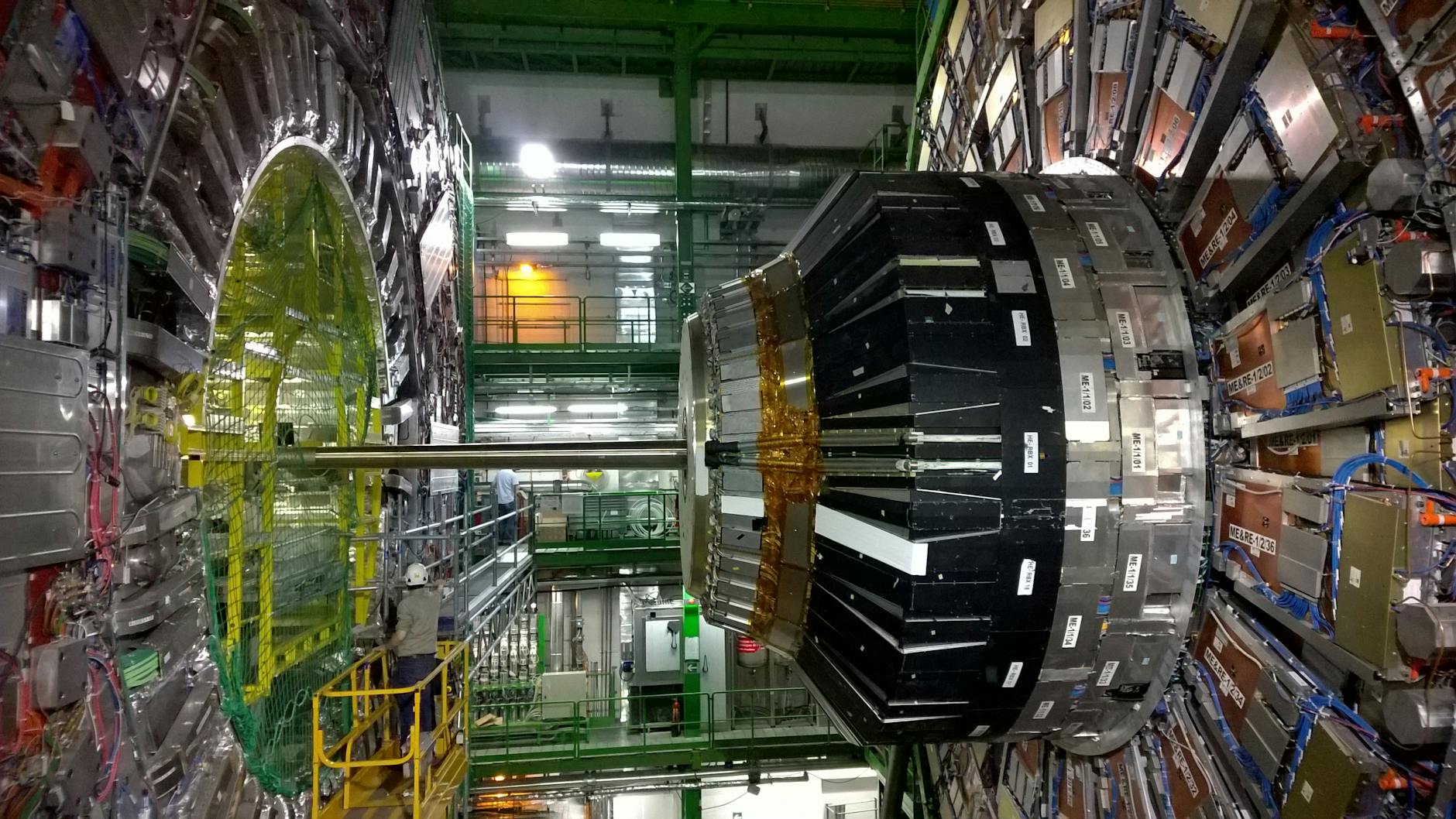
In an unexpected turn of events, the Large Hadron Collider (LHC) at CERN has once again captured the world's attention. Researchers have identified peculiar behaviour in particle data that could signal a breakthrough in our understanding of the universe. The CMS collaboration at CERN stumbled upon this anomaly, one that might indicate the presence of a new kind of particle, potentially the smallest composite particle ever observed.
The Standard Model, which has long served as the cornerstone of particle physics, is now under scrutiny. This model has been our best effort to explain how the fundamental particles of the universe interact, yet it has its limitations. As Ben Kilminster, a particle physicist at the University of Zurich, aptly puts it, the model accounts for a mere 15-20% of the universe. The rest, largely dark matter, remains a tantalising mystery.
The current findings are reminiscent of the LHC’s tumultuous history. First operational in 2008, it faced a significant setback due to a magnet quench incident shortly thereafter. Despite such challenges, the LHC has been at the forefront of numerous significant discoveries, including the Higgs boson in 2012. This latest anomaly could potentially eclipse past achievements, offering insights into phenomena that the Standard Model fails to account for.
While the scientific community is buzzing with excitement, caution is also the order of the day. The detected particle behaviour requires rigorous verification and peer review. If these findings hold up, they could usher in a new era of physics, prompting a reevaluation of many long-held theories.
The Implications for Physics
Should the existence of this new particle be confirmed, it would necessitate a revision of the Standard Model. Such a revision could unlock answers to many of the universe’s deepest secrets, from the nature of dark matter to the forces that govern cosmic evolution.
Ultimately, the discovery at the LHC serves as a reminder of the boundless potential of scientific inquiry. Each discovery, each anomaly, brings us one step closer to comprehending the vast, intricate tapestry of the universe.