Physics Breakthrough Sheds Light on Bird Flock Mysteries
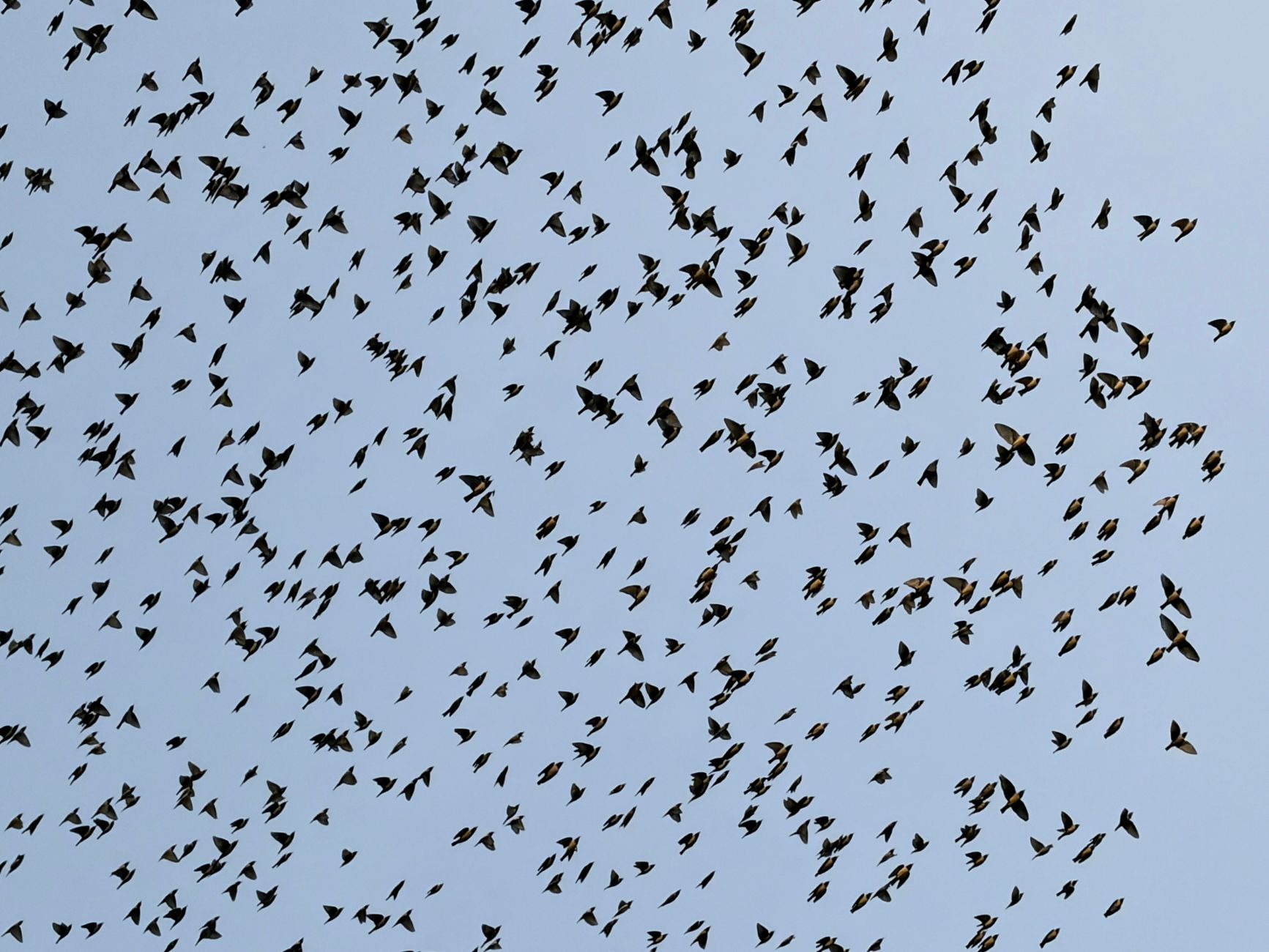
In an intriguing twist to classical physics, researchers have unveiled a new theoretical framework to explain the curious case of bird flocks that appear to thumb their beaks at Newton's third law of motion. This revelation comes from the scientists at the Cluster of Excellence ct.qmat in Dresden, who have tackled a longstanding enigma in the world of physics.
The third law, famously articulated by Sir Isaac Newton, posits that for every action, there is an equal and opposite reaction. Yet, the collective behaviour of bird flocks has long puzzled scientists, as the individual birds seem to operate in harmony without adhering to this fundamental principle. Instead of each bird responding equally to its companions, they react to select cues, a phenomenon that has intrigued researchers for decades.
Imaginary Forces at Play
The breakthrough involves introducing 'imaginary forces' into the equations that describe these systems. These forces account for the one-way interactions observed in bird flocks and other collective systems, such as bacterial colonies and migrating cells. The new model does not negate Newton's laws but rather extends them to encompass the complexity of such systems.
Dr. Franziska Scholz, a leading researcher on the project, explained, 'Our approach allows us to capture the dynamics of these systems more accurately. It's a bit like adding an extra dimension to our understanding of interactions.'
Implications Beyond Ornithology
While this discovery primarily sheds light on avian behaviour, its implications ripple through various fields. Understanding these principles could lead to advancements in robotics, where swarms of drones might one day mimic the fluid movements of birds. Moreover, the insights could prove crucial in medical science, particularly in understanding how cells migrate, which is vital for developing new treatments for diseases such as cancer.
The research not only challenges our understanding of Newtonian physics but also opens new avenues for exploring how nature's more complex systems operate. As scientists continue to explore these realms, the boundary between classical and modern physics becomes ever more blurred, promising fascinating discoveries ahead.