Robotic Labs Revolutionise Research with Remote Control
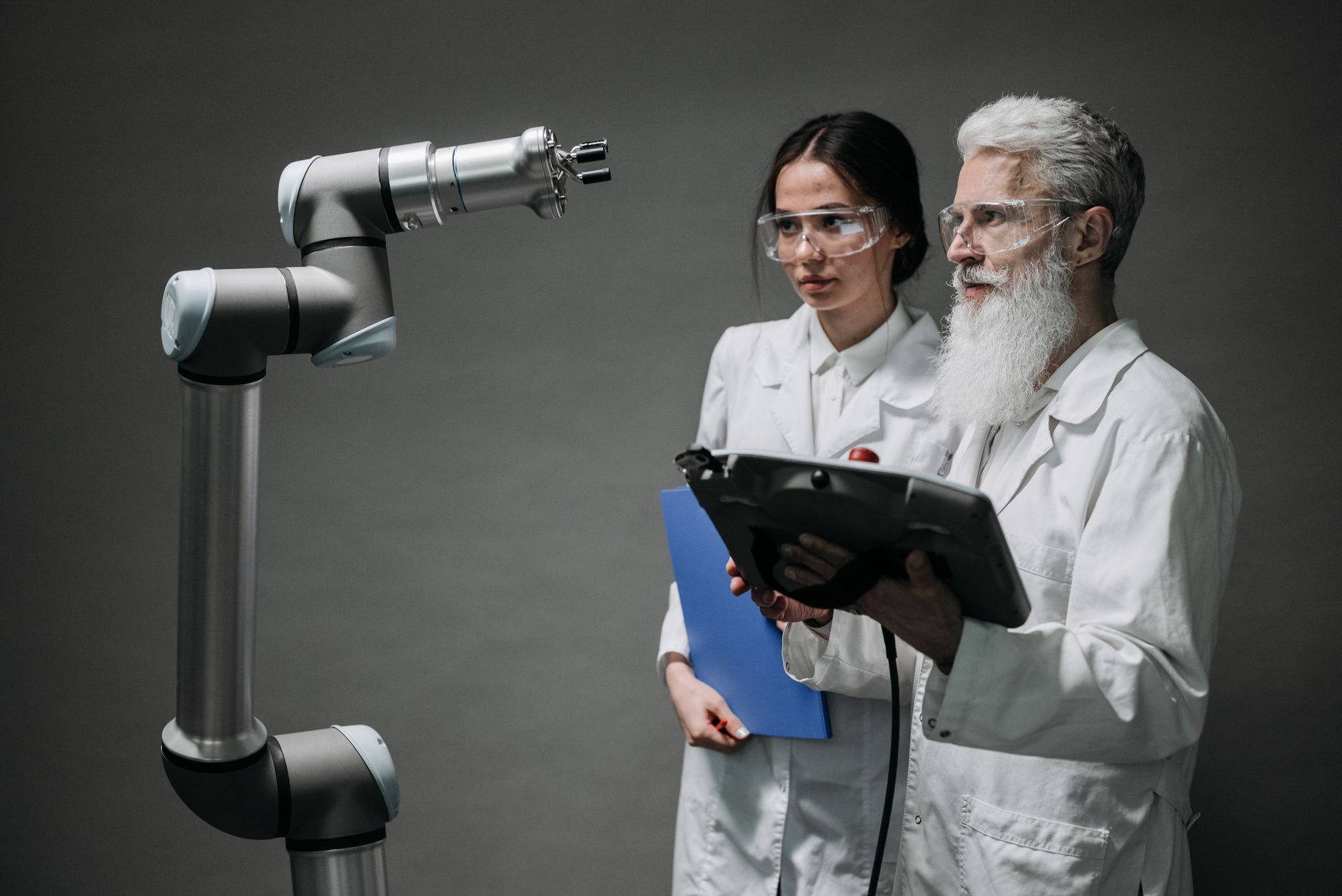
In the heart of the laboratory, the hum of robotics and the glow of digital screens signal a new era. Gone are the days of endless pipetting and laborious titrations, replaced by the sweeping arms of AI-powered machines. These autonomous robots, now a staple in labs across the globe, are at the forefront of a technological shift that is reshaping scientific research.
While the robots whirr into action, human involvement has taken a backseat, albeit a more cerebral one. Graduate students, traditionally the foot soldiers in the trenches of research, now find themselves in a different role. Instead of being chained to lab benches, they troubleshoot and fine-tune experiments from their living rooms, often in pyjamas and armed with laptops. It's a scenario that sounds like science fiction but is an everyday reality in the world of modern research.
The Rise of Robotic Labs
The concept of robotic labs isn't entirely new, but their capabilities have expanded exponentially. These AI-driven machines can design, execute, and analyse experiments with minimal human intervention. The primary aim is to release human researchers from the tedious and repetitive tasks that have long been the bane of scientific inquiry.
The University of Liverpool, for instance, has embraced this technology with open arms. Four towering robots, each standing 1.75 metres tall, tirelessly navigate the chemistry lab, shuttling materials between automated workstations. They perform tasks with precision and efficiency that not only speed up research but also reduce the margin for error.
Remote Supervision: A New Norm
For young researchers, the shift has been both liberating and challenging. While the freedom from monotonous tasks is welcomed, the responsibility of ensuring the smooth operation of these complex machines falls squarely on their shoulders. It requires a new set of skills—part IT specialist, part traditional scientist. The ability to diagnose and solve issues from afar has become as crucial as understanding the chemical processes themselves.
Despite the challenges, the benefits are undeniable. Labs can operate around the clock, and the pace of research has accelerated. Moreover, this remote control model has proven invaluable during disruptions like pandemics, ensuring continuity in research activities.
As science marches into the future, the blend of human intellect and robotic precision promises to unlock new realms of discovery. For now, at least, the sight of a grad student fixing a robot from bed is no longer an oddity but a testament to the resilience and adaptability of human ingenuity.