Robots Take the Reins in Cutting-Edge Autonomous Labs
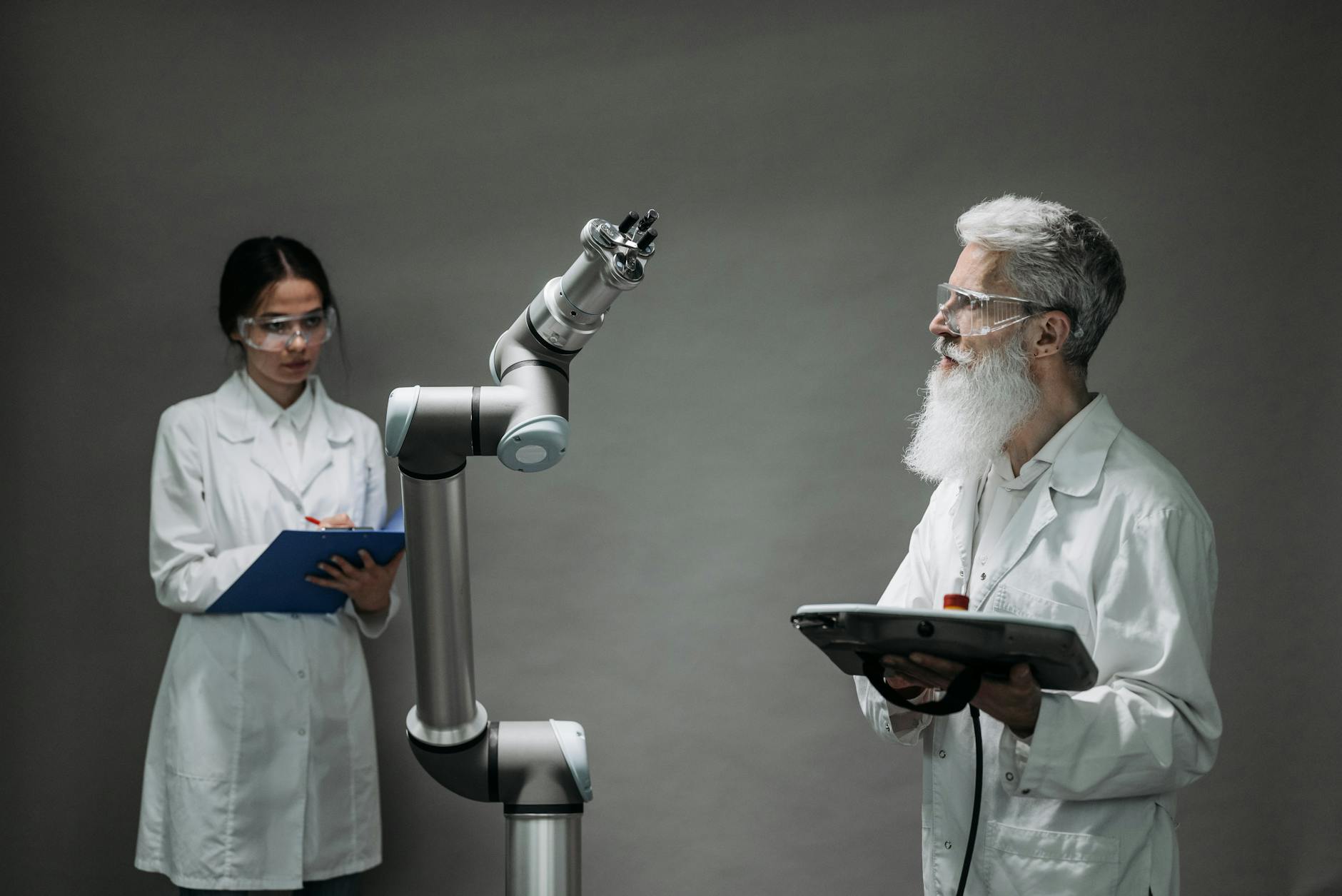
In a technological twist worthy of a sci-fi script, scientists are now handing over the reins of laboratory work to robots. These autonomous laboratories, powered by artificial intelligence, promise to revolutionise the way scientific research is conducted. The idea, both audacious and intriguing, involves robots learning directly from human researchers and conducting experiments independently.
At the heart of this innovation is the pursuit of efficiency. Traditional laboratory work, often painstakingly slow, is being reimagined. By outsourcing repetitive tasks to robots, scientists hope to accelerate the pace of discovery while freeing human minds for more complex and critical thinking. Dr. Emily Carter, a lead researcher in one of these labs, remarks, "It's about letting humans do what they do best—innovate and interpret—while robots handle the grunt work."
However, not everyone is convinced. While the concept of self-driving laboratories is captivating, potential investors have shown reluctance, wary of the practical implications and financial viability. Critics argue that the human touch is irreplaceable, and that the nuances of scientific exploration might be lost in translation to robotic counterparts.
The Promise and the Peril
The promise of autonomous labs lies in their ability to operate continuously, unhindered by human limitations. This 24/7 work cycle could mean more rapid advancements in fields like drug development and environmental science. Yet, as with any technological leap, there is a perilous side. Dependence on automated systems raises questions of reliability and accountability, especially when robots are entrusted with complex scientific tasks.
Advocates of this robotic revolution, like Dr. Sanjay Patel from Argonne National Laboratory, assert that the integration of AI in labs is not about replacing scientists but augmenting their capabilities. "Think of them as co-scientists," Patel explains. "Our approach starts by learning directly from expert scientists. It's a partnership, not a takeover."
As the scientific community grapples with these changes, the debate continues over the role of AI in the wet lab. With only a small fraction of life science teams currently seeing tangible benefits from AI, the journey to full acceptance is likely to be long and complex. Yet, for those at the frontier of this innovation, the potential rewards are worth the risks.