Scientists Uncover Missing Element of Milky Way’s Black Hole
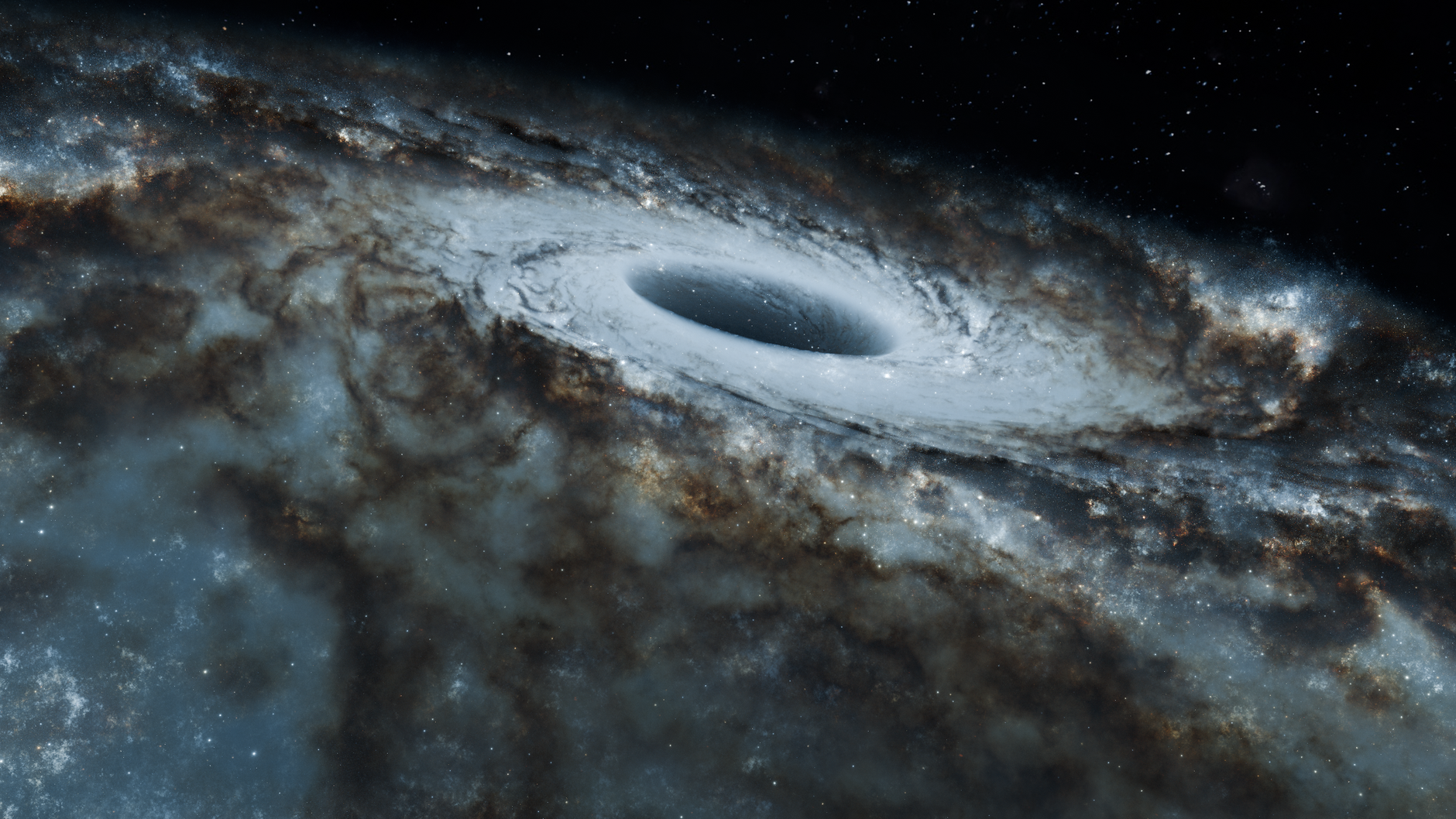
In an astronomical revelation that has sent ripples through the scientific community, researchers have successfully detected a long-sought feature of the Milky Way's enigmatic black hole, Sagittarius A*. Situated a staggering 26,000 light-years from our solar system, this supermassive black hole has been a subject of intrigue and mystery for decades.
The breakthrough emerged through the use of gravitational lensing, a sophisticated technique that allows scientists to observe the bending and distortion of light by massive objects like black holes. This method has proven instrumental in exposing isolated black holes that are typically invisible to traditional observational methods.
Unveiling the Mysteries
The discovery of this missing feature is not just a scientific triumph; it represents a crucial piece in the complex puzzle of understanding black hole formation and evolution. The feature in question, previously undetected, provides critical insights into the dynamics at play in the heart of our galaxy. As one scientist put it, "It's akin to finding a missing piece of a cosmic jigsaw."
Such findings have far-reaching implications, potentially aiding in the identification of other hidden black holes within the Milky Way and nearby galaxies. The ramifications of this research extend beyond mere curiosity, offering a glimpse into the fundamental processes that govern our universe.
Implications for Future Research
This revelation comes at a time when European scientists have also reported the discovery of the largest stellar black hole in the Milky Way, known as Gaia BH3, situated less than 2,000 light-years from Earth. The synergy between these discoveries underscores a burgeoning era of black hole research, promising a deeper understanding of these celestial phenomena.
With each new discovery, physicists and astronomers alike inch closer to unravelling the mysteries of the universe. The detection of this missing feature in Sagittarius A* is a testament to human ingenuity and the relentless pursuit of knowledge, reminding us that even the darkest corners of space can yield to the light of scientific inquiry.