SpaceX's Dragon: A Crucial Delivery to the ISS Amidst Cosmic Ambitions
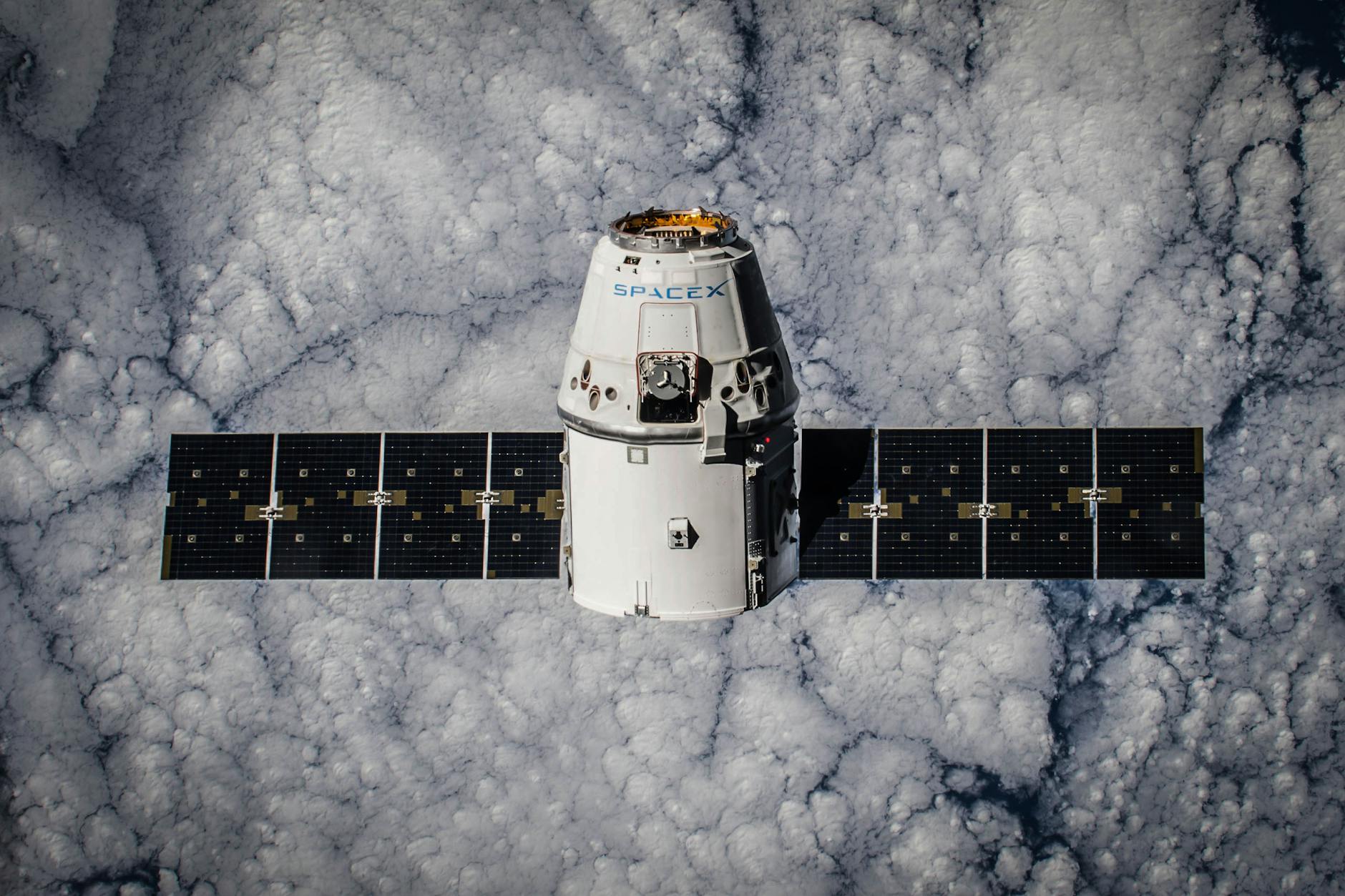
As dawn broke over the Atlantic, SpaceX's Dragon spacecraft made its final approach to the International Space Station (ISS), a mission emblematic of the burgeoning era of commercial space exploration. At precisely 6:38 a.m. EDT, the Dragon docked with the forward port of the station's Harmony module, delivering over 6,500 pounds of vital scientific instruments and essential supplies.
This mission, part of NASA's Commercial Resupply Services programme, marks yet another milestone in the collaboration between the agency and private aerospace companies. SpaceX, with its reusable rockets and ambitious plans, has been at the forefront of this new chapter in space exploration.
Science on Board
The cargo includes a range of scientific experiments that will advance our understanding of life in microgravity. Of particular interest is a study on the effects of microgravity on human heart cells, which could yield insights into cardiac health both in space and on Earth. Additionally, the Dragon is transporting materials for a study on the behaviour of fire in confined spaces, a crucial aspect for the safety of future space habitats.
Such research not only enhances our knowledge but also ensures the safety and efficiency of future long-duration space missions. The significance of these experiments is amplified by the fact that space remains one of the most challenging environments for human exploration.
Looking Beyond
SpaceX's ambitions, however, extend far beyond resupplying the ISS. With plans for the Red Dragon mission to Mars and the Dragon XL for the Lunar Gateway, the company is positioning itself as a key player in humanity's quest to explore deeper into the cosmos.
These proposed missions highlight the strategic importance of the current resupply missions. Each successful docking, each safe delivery of cargo, is a step toward proving the reliability of SpaceX's technology for extraplanetary missions.
For NASA, partnerships with companies like SpaceX are pivotal in its Artemis programme, which aims to return humans to the Moon and eventually send astronauts to Mars. As the Dragon departs the ISS, leaving behind its precious cargo, it carries with it the hopes and ambitions of a future where space is not the final frontier, but merely the next one.