The Unseen Bias: Why We Walk in Circles
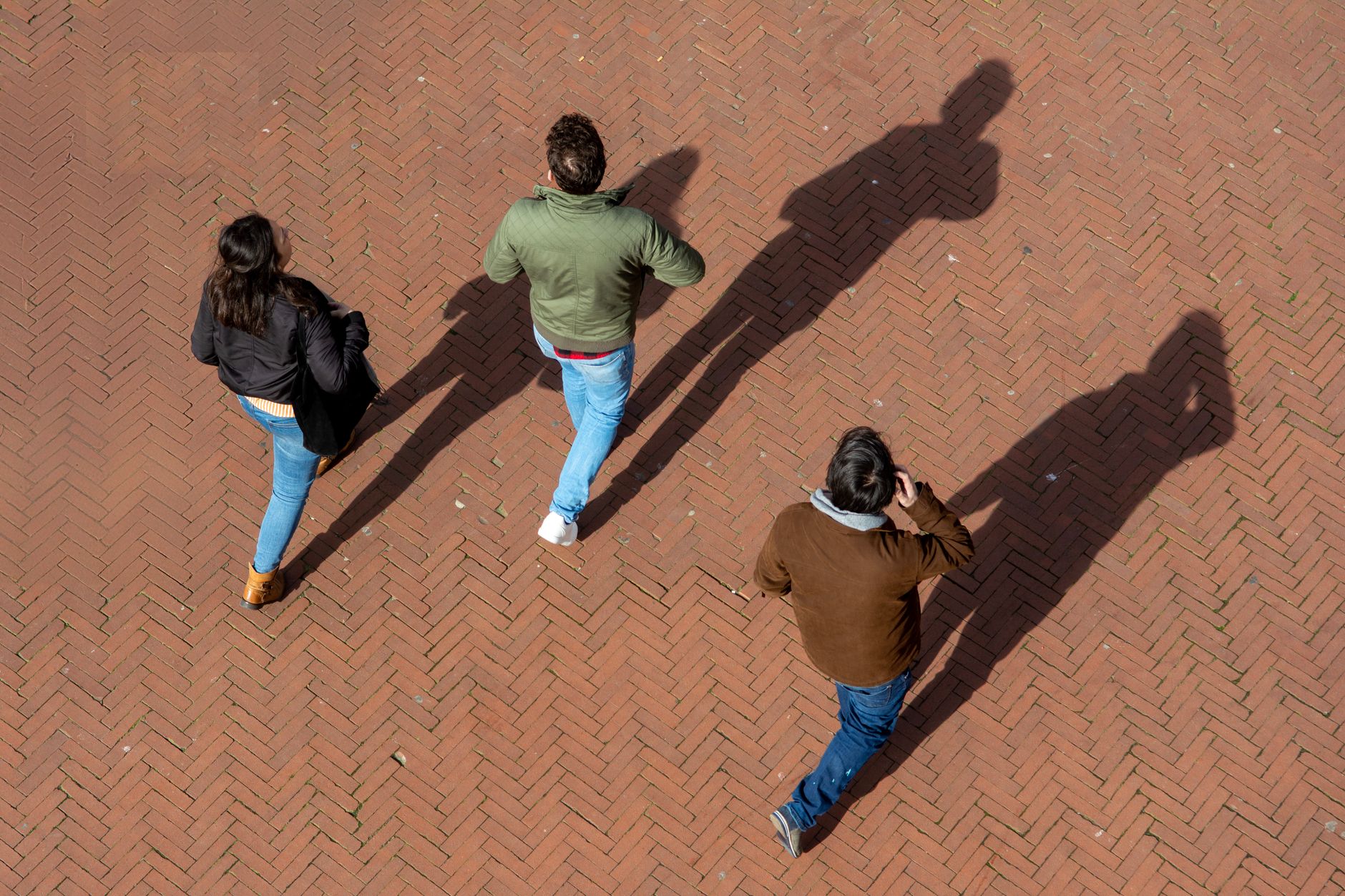
Imagine strolling through a park, blissfully unaware of the invisible forces gently nudging your steps in a particular direction. This is not the plot of a science fiction novel, but the findings of a recent study that has uncovered a peculiar pattern in the way humans walk. Researchers from the University of Munich and the University of Tokyo have observed that, when left to their own devices, people tend to drift in an anticlockwise direction.
The discovery came about quite by chance, as is often the case in scientific research. Initially, the study aimed to explore crowd dynamics, but a curious pattern emerged when individuals were observed walking in a hexagonal space devoid of external influences. A total of 209 participants ambled around this enclosure, and consistently, they veered anticlockwise.
The Science of Straying
Susanne Lipfert, a sports scientist at the University of Munich, explains that this double-bounce walking pattern is distinct from the single bounce observed in running, where one's motion predominantly involves airborne strides. The persistent turning bias, as it turns out, could not be easily attributed to cultural background, gender, or even physical dominance like handedness or eye dominance.
Claudio Feliciani, a professor at the University of Tokyo, who co-authored the study, suggested that this bias might be fundamentally ingrained in human locomotion, hinting at possible evolutionary roots. The researchers tested various scenarios, including differences in crowd size and the presence of walls, yet the anticlockwise drift remained unwavering.
Implications and Speculations
While this discovery might seem trivial at first glance, it could have profound implications for the study of human behaviour and urban planning. Understanding these subtle biases can lead to more efficient design of public spaces and pathways, potentially influencing everything from pedestrian traffic flow to emergency evacuation routes.
As the research community ponders this newfound quirk in human movement, one thing is certain: the way we walk is not as straightforward as it seems. This study opens up a new avenue for exploring how unconscious biases influence not just our footsteps, but perhaps even our broader journeys through life.