Venus' Turbulent Clouds: Unravelling the Mysteries of Hydraulic Jumps
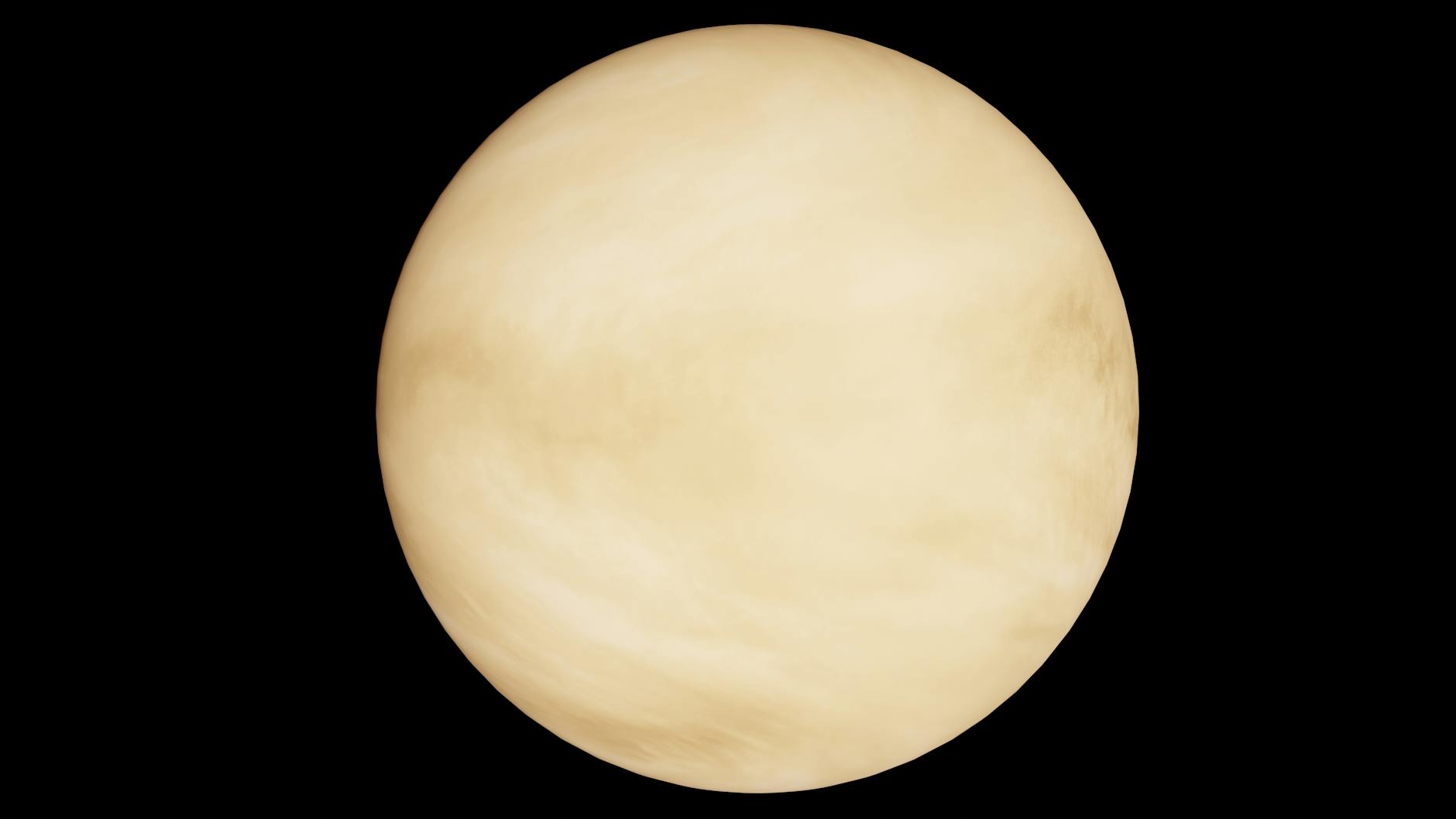
In a fascinating twist of planetary science, the mysterious cloud formations on Venus have finally been decoded, revealing the largest hydraulic jump in our solar system as their architect. This phenomenon, which stretches a staggering 6,000 kilometres across the Venusian skies, was first discovered in 2016 and has since puzzled scientists with its rapid movement and sharply defined edges.
The concept of a hydraulic jump might be more familiar from a domestic setting. Imagine turning on a kitchen tap; as water hits the sink, it initially spreads out quickly before suddenly rising in depth. On Venus, a similar process occurs, albeit on a planetary scale, where sulphuric acid vapour rises and forms these colossal clouds. The discovery of such a hydraulic jump on Venus is particularly intriguing because it connects vast horizontal processes with localised vertical waves—an unexpected revelation in fluid dynamics.
The Atmospheric Riddle
Venus, often dubbed Earth's twin due to its similar size and composition, is anything but benign. Its atmosphere is a swirling vortex of toxic gases, moving at breakneck speeds. Until now, the mechanisms driving these swift movements were largely speculative. However, the identification of a hydraulic jump as a key player offers a new perspective on the planet's meteorological dynamics.
Scientists believe that the atmospheric pressure and temperature conditions on Venus create an environment conducive to such hydraulic jumps. These findings not only enhance our understanding of Venusian weather patterns but also challenge existing notions of atmospheric processes on other celestial bodies.
A New Frontier
This revelation could have far-reaching implications for our understanding of fluid mechanics beyond Earth. By studying Venus' atmosphere, scientists hope to glean insights into similar processes that might occur on other planets, including gas giants like Jupiter and Saturn. The interplay between localised and planetary-scale dynamics could prove crucial in refining existing models of atmospheric behaviour.
In the grand tapestry of space exploration, the decoding of Venus' giant clouds is a reminder that the cosmos continually offers new mysteries and revelations. As we peer into the swirling mists of our neighbouring planet, we inch closer to comprehending the complex dance of elements that govern not just Venus, but potentially many other worlds.