Webb Telescope Unveils Ancient Black Hole Mystery
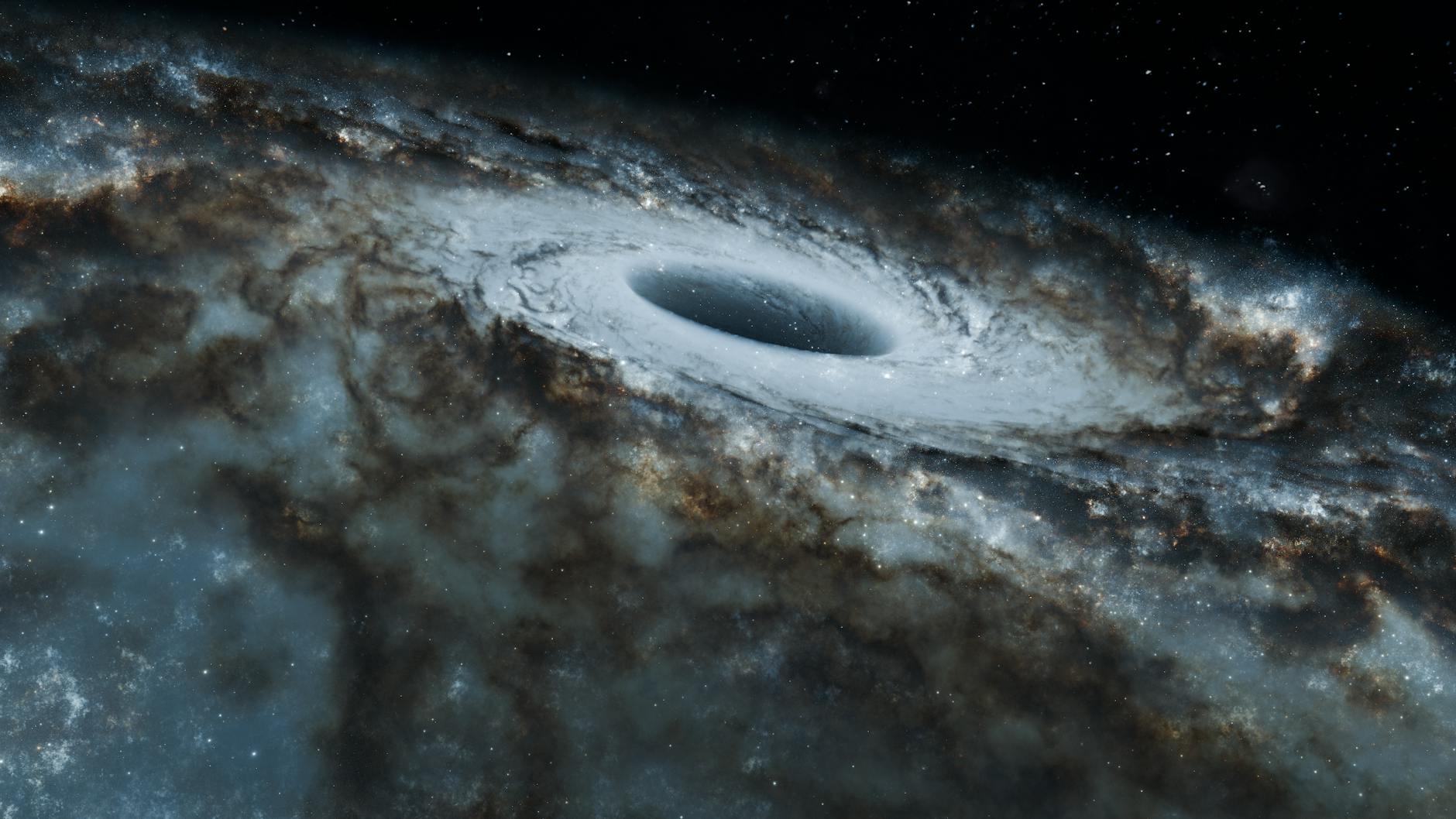
In a revelation that has sent ripples through the astrophysics community, NASA’s James Webb Space Telescope has uncovered a black hole that appears to have formed before its host galaxy. This astonishing discovery challenges conventional narratives of cosmic evolution, suggesting that some supermassive black holes emerged fully grown from the primordial chaos of the early universe.
The black hole in question resides in the far-flung galaxy known as Abell2744-QSO1, more than 13 billion light-years from Earth. At the heart of this diminutive galaxy lies a 'naked' black hole, weighing in at 50 million times the mass of our Sun. This discovery, made possible by the unparalleled imaging capabilities of Webb's instruments, hints at a different path of formation, one that bypasses the traditional route of stellar collapse.
The Cosmic Conundrum
Astronomers have long assumed that black holes form as a result of a collapsing star, gradually growing by accreting gas and merging with others. However, the 'little red dot' observed by the Webb telescope defies this logic. It indicates that some black holes might have originated in an era before galaxies had the chance to fully coalesce, raising the possibility that dark matter might have played a pivotal role in their formation.
Research teams, including those from UCLA, are delving into this possibility with renewed vigour. The presence of such massive black holes so soon after the Big Bang could necessitate a revision of our understanding of the universe’s infancy. These findings could potentially explain why certain galaxies appear to have such massive black holes at their centres so early in their life cycles.
Revisiting the Early Universe
This breakthrough fuels ongoing debates about the nature of dark matter and its influence on cosmic structures. While the evidence for dark matter remains indirect, its supposed gravitational effects could account for the rapid formation of these black holes, offering a new perspective on the universe's formative years.
As researchers continue to analyse data from the Webb telescope, this discovery is set to inspire further studies. It not only reshapes our understanding of black hole genesis but also reinvigorates discussions about the very nature of the universe. With each revelation, the cosmos reveals a little more of its enigmatic past, challenging us to rethink what we know.